
Can Brain Rewiring Really Help with Porn Induced Erectile Dysfunction Recovery? Find Out Here

If you’ve been feeling like your body just isn't showing up for you in the bedroom lately, you’re not alone. It’s a frustrating spot to be in: wanting to be intimate with your partner but finding that your physical response simply doesn't match your desire. You might have heard whispers about "brain rewiring" or "rebooting" as a way to fix this. But can you really train your brain to fix your performance? The short answer is: Absolutely. In my work as Martina Somorjai (Szundi), an Award-Winning Potencyologist® and a revolutionary innovator in the field of natural potency recovery, I have helped thousands of men realize that the hardware (your body) is usually fine: it’s the software (your brain) that needs an update. (Ms. Szundi, CEO of my PoP Program and Award-Winning Potencyologist®) The Root Cause: Why the Brain Controls the Bedroom Most men are taught to look for a "blue pill" solution whenever they face a dip in performance. But those pills don’t fix the root cause; they just temporarily force a physiological response. If you are struggling with pied symptoms: which often look like a lack of response with a real partner despite having no issues when alone with high-dopamine digital media: the issue isn't your blood flow. It's your neurological reward system. When you consume excessive 2D visual stimulants, your brain is flooded with unnaturally high levels of dopamine. Over time, your brain adapts by "down-regulating" its receptors. It becomes desensitized. A real-life partner, no matter how much you love or find them attractive, simply cannot compete with the novelty and intensity of a digital screen. This leads to performance anxiety erectile dysfunction, where the fear of failing actually shuts down the very pathways you need to stay firm. What Does PIED Recovery Actually Look Like? To understand pied recovery, we have to talk about neuroplasticity. This is the brain's incredible ability to reorganize itself by forming new neural connections. Just as you "wired" your brain to prefer digital cues, you can "rewire" it to respond to 3D, real-world intimacy. The process usually involves three main stages: The Desensitization Break: Stopping the intake of high-dopamine visual-auditory cues. This allows your dopamine receptors to "rest" and eventually multiply again. The Rewiring Phase: Shifting your focus from 2D pixels to 3D sensations. This is where you learn to appreciate the touch, scent, and presence of a partner without the need for extreme visual novelty. Resensitization: Your brain begins to find pleasure in natural intimacy again. You start to notice that your body responds naturally to a partner’s touch, often for the first time in years. (Illustrating the transition from digital stimuli to real-world intimacy and connection) How to Last Longer in Bed Naturally Many men come to me asking how to last longer in bed naturally. The secret isn't a special cream or a numbing spray. It’s about managing the nervous system. When you are stuck in a cycle of digital habits, your brain is trained for a "quick hit" of dopamine. This translates to the bedroom as a rushed experience, often leading to premature ejaculation anxiety. By rewiring the brain, you move out of the "fight or flight" mode (sympathetic nervous system) and into the "rest and digest" mode (parasympathetic nervous system). When you are calm and connected, your body doesn't feel the frantic need to reach the finish line immediately. True stamina comes from a brain that feels safe and present, not one that is hunting for the next hit of dopamine. The Science Behind the Timeline Research suggests that a full "reset" of the reward system can take anywhere from 30 to 90 days, though every man is different. In some cases, mild issues can see improvement in just a few weeks. However, for those who have been using digital stimulants since their teenage years, the path might be longer. The good news? A study showed that 71% of men with psychological performance challenges reversed their symptoms within three months of dedicated brain rewiring and lifestyle changes. This isn't magic; it's biology. By removing the "supernormal stimulus" of the screen, you allow your natural physiological responses to take the lead again. (Graph showing the improvement of dopamine receptor sensitivity over a 90-day recovery period) Overcoming Performance Anxiety Erectile Dysfunction Anxiety is the ultimate performance killer. When you worry about whether you’ll be able to "perform," your brain releases adrenaline. Adrenaline constricts blood vessels: the exact opposite of what you need for a firm response. This creates a vicious cycle. You have a bad night, you worry about it the next time, and that worry ensures another bad night. Breaking this cycle requires more than just willpower; it requires a structured program that addresses the mental and neurological blocks. As a revolutionary innovator in this field, I’ve designed my PoP Program to help you bypass this anxiety by focusing on the underlying neurological health. Why Pills Aren't the Answer Pills treat the symptom, not the man. They don’t address why you feel anxious, why you’ve lost interest in your partner, or why your brain is stuck in a digital loop. Furthermore, they can create a psychological dependency where you feel you "need" them to be a man. Real confidence comes from knowing your body works because it's healthy, not because of a chemical intervention. When you focus on fixing the root causes: psychological, mental, and neurological: you regain a sense of mastery over your own body that a pill can never provide. The my PoP Program Approach As Martina Somorjai, I have dedicated my career to being an Award-Winning Potencyologist® who looks at the "Whole Man." My PoP Program isn't just a list of "don'ts." It’s an empowering, educational journey that teaches you how your brain works so you can take back the wheel. We focus on: Neurological Reset: Clearing the digital fog. Mental Reframing: Addressing the "ghosts" of past failures. Physical Reconnection: Learning to listen to your body’s natural cues. If you are tired of the
The Director is Tired: When Your Brain Quits on You
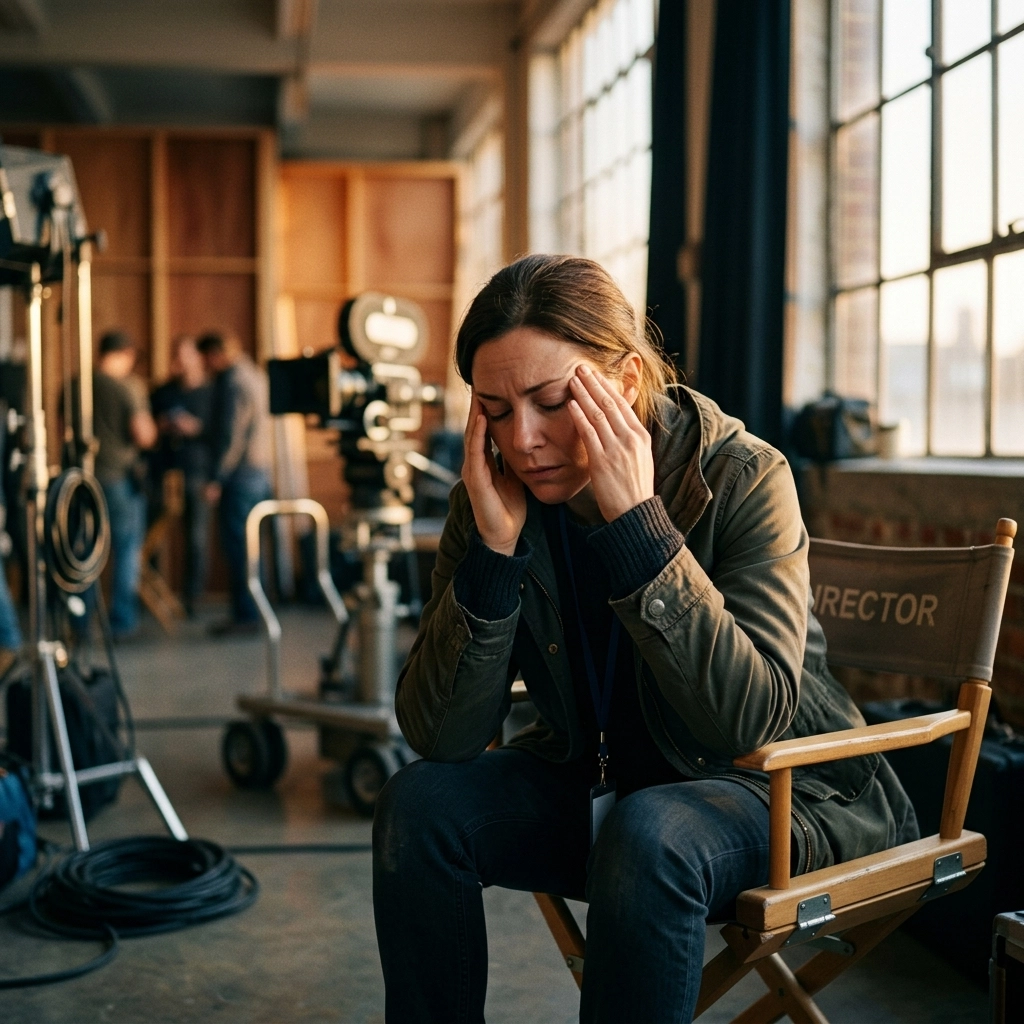
Have you ever felt like your brain just… stopped listening to you? You want to be present, you want to feel that spark of connection, and you want your body to respond the way it’s supposed to. But instead, it’s like the internal wiring has gone haywire. You’re there, but the "Director" of your mind has walked off the set, leaving the production in total chaos. I see this every day in my work at my PoP Program. Men come to me frustrated, thinking they have a character flaw or a "moral" problem. They think they aren't "man enough" or that they’ve simply lost their edge. I’m here to tell you: it’s not a moral failing. It’s a neurological injury. When we talk about screen-induced performance issues, we aren't talking about "willpower." We are talking about physical, measurable changes in the most complex organ you own. Your brain isn't "bad", it’s exhausted. And today, I want to show you exactly why that happens using the science I’ve gathered for my upcoming book. Meeting the Cast: The Reward Center and The Director To understand why your recovery from screen-induced issues might be stalling, we need to look at two specific "characters" inside your skull. First, there is the Ventral Striatum. In the medical world, "Striatum" means "striped body." This is essentially your brain’s reward center. It’s the part of you that lights up when you eat a delicious steak, win a bet, or experience a moment of intense pleasure. It’s fueled by dopamine, the "joy hormone." Then, there is the Prefrontal Cortex. I like to call this part "The Director." This is the part of the brain that makes us human. It’s responsible for: Making strategic decisions. Judging future consequences. Inhibiting inappropriate responses (the "brakes"). Managing emotional stability. In a healthy brain, the Reward Center and the Director work in harmony. The Reward Center says, "That looks fun!" and the Director says, "Yes, but let’s consider the consequences first." But when virtual, high-intensity content enters the mix, this relationship turns toxic. The SPECT Scan: A Look at the "Exhausted" Brain We don't have to guess about this anymore. Researchers have used something called SPECT (Single-Photon Emission Computed Tomography) scans to look at the brains of people heavily dependent on virtual stimulation. What they found was shocking. Even to someone without a medical degree, the scans are clear: the brains of those addicted to high-frequency virtual content look visibly "exhausted." In fact, some research suggests that these brain scans show more significant signs of "wear and tear" than the scans of individuals addicted to heavy substances like heroin. The area most affected? The Director. When the Prefrontal Cortex is "tired," it loses its ability to function as the brain's braking system. This leads to what we call Hypofrontal Syndrome. The Sugar Analogy: Why "More" Isn't Working I often explain this process using the example of the pancreas. If you eat a healthy amount of sugar, your pancreas produces insulin, your blood sugar levels out, and everything is fine. But if you bombard your system with massive amounts of sugar every single day, the pancreas has to work overtime. Eventually, it gets "tired." Your cells become resistant to the insulin, and you might develop a physical condition where the old amount of sugar just doesn't trigger the right response anymore. Your Ventral Striatum works the same way with dopamine. When you first started watching adult cinema or virtual content, a simple image might have been enough to trigger a massive dopamine release. You felt the rush. You felt the "joy." But as you continued to use virtual content as a primary source of pleasure, your brain’s "pancreas" (the Reward Center) got tired. The "usual" videos stopped working. You needed more intensity, more extreme genres, or longer sessions just to feel a fraction of that initial spark. This is why many men find that real-life physical contact suddenly feels "boring" or "insufficient." It’s not that your partner isn't attractive: it’s that your Reward Center has become insensitive to normal stimuli. Hypofrontal Syndrome: When the Brakes Fail When your brain reaches this state of exhaustion, it enters a phase called Hypofrontal Syndrome. This isn't just a fancy term; it has real-world consequences that affect your confidence, your relationships, and your performance. If you’ve been noticing "PIED symptoms" (though we prefer to call them screen-induced performance challenges), you might also be experiencing these side effects of an exhausted "Director": Inability to inhibit impulses: You find yourself clicking on content even when you promised yourself you wouldn’t. Emotional Lability: You’re more irritable, vulnerable, or prone to mood swings. Poor Judgment: You struggle to see the long-term consequences of your current actions. Disinhibition: You might say or do things that feel "out of character." The "Director" is essentially asleep in the chair. Without the Director to guide the ship, the Reward Center is running on autopilot, desperately seeking the next dopamine hit just to feel "normal." Is It Mental or Medical? I often get asked, "Is it mental or medical?". The truth is, it’s both: because your mind is a product of your physical brain. When your Prefrontal Cortex is physically exhausted, your "mental" willpower doesn't stand a chance. This is why "just trying harder" rarely works for my clients. You can't "willpower" your way out of a neurological injury any more than you can "willpower" a broken leg to heal faster. The recovery process requires a strategic approach to rewiring. We have to let the "Director" rest and give the Reward Center time to regain its sensitivity to normal, real-world intimacy. The Path to Natural Confidence The good news is that the brain is plastic. It can heal. But you have to stop the bombardment. When you step away from the virtual stimuli that caused the exhaustion, the "Director" begins to wake up. The Ventral Striatum starts to reset its baseline. Slowly, the things that used to feel "boring": like holding hands, a soft touch, or
Insulin Resistance for Joy: The Neurological Root of PIED

I often talk to men who feel like they’ve lost their "spark." They describe a frustrating wall between their desires and their physical responses. Most of the time, they think it’s a failure of their body: or worse, a failure of their character. But as I’ve explored in my work and my book, the reality is far more biological. It’s not that you’ve "run out" of drive; it’s that your brain has developed a specific kind of resistance. I like to use a kitchen-table analogy to explain this because it makes the complex neuroscience of the brain much easier to digest. We all understand how sugar affects the body. If you eat a mountain of candy every day, your system eventually stops responding to insulin the way it should. This is insulin resistance. Surprisingly, the same thing happens in your head when you consume too much digital adult content. I call it "Insulin Resistance for Joy," and it is the primary neurological root of PIED (Performance Issues related to Digital stimuli). The Reward Center: Your Brain’s Striped Body To understand how this happens, we have to look at a very specific part of the brain called the ventral striatum. In my research, I’ve noted that there isn't even a direct, common translation for this term in many languages, but "striatum" essentially means "striped body." This is your brain’s reward hub. Whenever you experience something pleasant: whether it’s a delicious meal, a promotion at work, or a warm physical connection: this area lights up. It releases dopamine, the "joy hormone," which tells your brain: "This feels good. Let’s do this again." In a balanced life, this system works perfectly. You eat a good meal, you feel satisfied. You connect with a partner, you feel a rush of intimacy. But when digital adult films enter the equation, the system gets flooded. The "Super-Sugar" of Digital Imagery Why is digital adult content so different from a "normal" pleasant experience? Because it provides a level of novelty and intensity that nature never intended for us to process in such high volumes. Think of a natural intimate encounter as a piece of fruit. It’s sweet, it’s satisfying, and it’s healthy. Now, think of high-definition, high-speed digital adult imagery as pure, refined, industrial-grade sugar. When you watch these films, the ventral striatum doesn’t just release a little dopamine: it releases a tidal wave. If this happens once in a while, the brain can recover. But for those who find themselves watching daily, the ventral striatum is constantly bathed in these high levels of dopamine. Just like the pancreas getting "tired" from too much sugar, the brain's reward center begins to protect itself. It lowers its sensitivity. It says, "This is too much; I’m going to stop listening to these signals." Hypofrontal Syndrome: When the Brakes Fail This is where the science gets really interesting: and a bit sobering. I’ve reviewed research involving SPECT (Single Photon Emission Computed Tomography) and fMRI scans that show the brains of those heavily dependent on virtual adult content. To the untrained eye, these scans are shocking. The brains often look "exhausted." Specifically, the prefrontal cortex: the part of the brain right behind your forehead: shows significantly decreased activity. I call the prefrontal cortex the "Director." It is the part of you that makes you human. It’s responsible for: Judging future consequences. Inhibiting inappropriate responses (your "braking system"). Strategic decision-making. When this area is exhausted, we call it hypofrontal syndrome. It’s the same phenomenon seen in those with severe chemical dependencies. When the "Director" is offline, you become more impulsive, more irritable, and less able to feel the natural, subtle joys of real-life connection. Why Real Intimacy Stops Working This neurological exhaustion explains why so many men struggle with bedroom performance even when they are with someone they truly care about. If your brain is calibrated to respond only to the "super-sugar" of digital imagery, the natural rhythm of physical intimacy feels "boring" to your ventral striatum. Your brain is literally too tired to produce the necessary response. You might be mentally attracted to your partner, but the physical link: the bridge between the brain and the body: is broken because the reward center is currently "insulin resistant" to normal levels of joy. This is the core of PIED recovery. It isn’t about "trying harder" in the bedroom. In fact, trying harder usually just creates performance anxiety, which makes the problem worse. The real work happens in the brain. The Escalation Trap Another symptom of this resistance is the need for "higher doses." Just as an alcoholic might move from beer to hard liquor to get the same buzz, a brain resistant to dopamine will seek out more extreme categories of digital content. You might start with simple imagery, but soon, that "previously sufficient visual stimulus" is no longer enough. Your brain demands more novelty, more intensity, and more shock value just to feel a flicker of that original dopamine rush. I want you to know that this isn't because you are a "bad" person or have "dark" tastes. It is a biological reaction to a desensitized reward system. Your brain is simply trying to find a way to overcome its own resistance. How to Last Longer and Recover Naturally The good news is that the brain is remarkably plastic. Just as insulin resistance can often be reversed with diet and lifestyle changes, "joy resistance" can be reversed by giving your brain a chance to rest and recalibrate. If you want to know how to last longer in bed naturally, the answer often starts with a digital detox. By removing the "super-sugar" stimulus, you allow the ventral striatum to regain its sensitivity. Over time, the "Director" (your prefrontal cortex) comes back online. You start to find that real-world stimuli: a touch, a scent, a look: start to trigger those pleasure centers again. Here are a few steps I recommend for starting this journey: Acknowledge the Biological Reality: Stop shaming yourself. Understand
The Proven Intimacy Confidence Framework: How to Last Longer in Bed Naturally Without a Single Pill

Let’s be real for a second. If you’re reading this, you’ve probably spent more time than you’d like to admit worrying about your staying power. You’ve likely wondered about how to last longer in bed naturally without having to rely on a little blue pill that makes your heart race and your face flush. Maybe you’ve experienced that sinking feeling when your body doesn’t respond the way your mind wants it to, or perhaps you’ve finished the marathon before you even reached the first mile. I’m Martina Somorjai, also known as Szundi. As an Award-Winning Potencyologist®, I’ve spent my career as a revolutionary innovator in the field of intimate health. I’ve seen thousands of men navigate the maze of performance anxiety erectile dysfunction and pied symptoms, and I’m here to tell you: the answer isn't in a pharmacy. It’s in your brain, your nervous system, and your biology. My PoP Program isn't about temporary fixes. It’s about a permanent transformation. Ms. Szundi (Martina Somorjai), Award-Winning Potencyologist® and CEO of my PoP Program. Why the "Pill" Approach is Failing You When men face premature ejaculation anxiety or struggles with physical readiness, the first instinct is often to look for a chemical solution. But here’s the truth: pills are a band-aid on a broken neurological circuit. They don't address why your heart is hammering at 140 beats per minute the moment the lights go down. They don't fix the fact that your brain has been over-stimulated by years of high-speed digital pixels. If you want to know how to last longer in bed naturally, you have to understand that performance is a symphony played by your brain and your body. If the conductor (your brain) is panicked, the music is going to be messy. In my work, I focus on the root causes: psychological, mental, and neurological. We’re going to look at the "Intimacy Confidence Framework," a system I designed to help you regain control, boost your stamina, and finally enjoy the connection you deserve. Identifying the Real Culprits: PIED and Anxiety Before we fix the problem, we have to name it. Many men in their 20s, 30s, and 40s are suffering from what we call pied symptoms (Physical Issues induced by Digital stimulation). This isn't a "broken" body; it's a "re-wired" brain. The Science of PIED Recovery When you consume excessive adult digital content, your brain's dopamine receptors become desensitized. You require more "novelty" and higher "intensity" to feel a response. When you get into a real-life intimate situation, the physical reality doesn't match the hyper-stimulated pixels your brain is used to. This leads to a disconnect where you struggle to maintain firmness or you finish far too quickly because your brain is trying to reach that high-intensity peak it’s been trained to expect. Successful pied recovery involves a total neurological reset. It’s about teaching your brain to find pleasure in the subtle, the slow, and the real. The Grip of Performance Anxiety On the other side of the coin is performance anxiety erectile dysfunction. This is a purely psychological loop. You worry about underperforming, which triggers your "fight or flight" response. Your body floods with adrenaline, which naturally pulls blood away from your core and into your limbs (to run or fight). The result? You lose your firmness or you climax prematurely as your body tries to finish the "threat" as fast as possible. Understanding the brain-body connection is the first step toward lasting longer naturally. The Intimacy Confidence Framework: 3 Steps to Natural Stamina As the Award-Winning Potencyologist®, I’ve refined this framework to target the neurological and physical systems simultaneously. 1. Neurological Desensitization (The Reset) The first step in how to last longer in bed naturally is to lower the "arousal floor." If your baseline for excitement is at a level 9 out of 10 because of digital stimulation, you’ll hit level 10 (the point of no return) within seconds. I guide my clients through a process of "sensate focus" and digital detoxification. By removing the hyper-stimulation of pixels, your brain begins the pied recovery process. You start to notice the sensation of skin, the scent of your partner, and the rhythm of your own breathing. This lowers your baseline, giving you a much wider "window of performance" before you hit the climax. 2. The Respiratory Anchor Most men who struggle with premature ejaculation anxiety hold their breath or take shallow, rapid breaths when they get excited. This tells your nervous system you are in danger. To last longer, you must master the "Cooling Breath." By taking deep, diaphragmatic breaths, you signal to your parasympathetic nervous system that everything is safe. This keeps your heart rate low and prevents the adrenaline spike that causes an early finish. 3. Pelvic Floor Mastery You’ve probably heard of Kegels, but most men do them wrong. In my PoP Program, we don't just squeeze; we learn "Active Release." A tight, tense pelvic floor is a one-way ticket to an early climax. If your muscles are already at 90% tension, it only takes a tiny bit of excitement to push them over the edge. Learning how to consciously relax the pelvic floor during intimacy is the "secret weapon" for natural stamina. This is a core component of moving past performance anxiety erectile dysfunction. Learning to control the pelvic floor is a physical skill that anyone can master with the right guidance. Breaking the Cycle of Premature Ejaculation Anxiety Anxiety is a thief. It steals your presence and your pleasure. When you’re stuck in a loop of premature ejaculation anxiety, you’re not "in the room": you’re in your head, watching a clock that isn't there. The Intimacy Confidence Framework teaches you to stay "grounded." Instead of focusing on the end goal (the climax), we shift the focus to the journey. This might sound "woo-woo," but it is grounded in neurological science. When you focus on the physical sensations of your hands, your feet, or your partner's breathing, you move out of the "prefrontal cortex"
5 Steps How to Last Longer in Bed Naturally and Build Unstoppable Intimacy Confidence (Easy Guide for Men)

Hey there. I am Martina Somorjai, though most of my clients and followers simply call me Szundi. If you’ve been feeling like your "internal clock" is running a bit too fast lately, or if you’ve found yourself worrying more about your performance than actually enjoying the moment, you are in the right place. I know how frustrating it is. You want to be the man who is present, confident, and capable of providing a fulfilling experience for your partner. Instead, you might be battling premature ejaculation anxiety or wondering why your body isn’t responding the way it used to. Before we dive into the steps, I want to introduce myself properly. I am an Award-Winning Potencyologist® and a revolutionary innovator in the field of male intimate health. My work at my PoP Program has changed the lives of thousands of men by moving away from temporary "blue pill" fixes and focusing instead on the actual root causes of performance issues. We don’t do Band-Aids here. We do deep, lasting, neurological and psychological restoration. If you are ready to learn how to last longer in bed naturally, let’s get into the mechanics of how your body and mind actually work together. Step 1: Mastering the "Brake Pedal" Through Muscle Control When most men think about lasting longer, they think about distracting themselves: counting backward from a hundred or thinking about something unappealing. This is the wrong approach. It takes you out of the moment and actually increases performance anxiety erectile dysfunction because you aren't present. Instead, you need to develop your physical "brake pedal." This involves the pelvic floor muscles. Think of these as the foundation of your intimate house. If the foundation is weak or overly tense, the whole structure shakes. Training these muscles naturally allows you to manage the "point of no return." By strengthening the pelvic floor, you gain the ability to physically dampen the urge to climax too early. The best part? You can do this anywhere. It’s about learning to isolate the muscles you use to stop the flow of urine. Squeeze, hold, and release. Over time, this physical awareness gives you a level of control you never thought possible. Step 2: Nervous System Regulation (The Breath Secret) The reason many men struggle with premature ejaculation anxiety is that their nervous system is stuck in "fight or flight" mode. When you are anxious, your body wants to finish the act as quickly as possible to get out of a "perceived" high-stress situation. To last longer naturally, you must learn to stay in the "rest and digest" state (the parasympathetic nervous system). The easiest way to do this is through your breath. Short, shallow chest breathing signals to your brain that there is an emergency. Deep, diaphragmatic belly breathing signals that everything is safe. When you are with your partner, if you feel your heart rate spiking and your control slipping, slow down your exhale. This simple neurological hack can add minutes to your performance by lowering your internal "arousal thermostat." Step 3: Recognizing and Fixing PIED Symptoms In the modern world, we have a massive hurdle that our grandfathers never dealt with: digital adult entertainment. I see so many men coming to me with pied symptoms: what we call Performance Induced Erectile Dysfunction. If you’ve spent years "training" your brain to respond to high-speed, high-novelty digital images, your brain has become desensitized. When you are with a real person, the "real-world" stimulation might not be enough to keep your brain engaged, leading to a loss of firmness or, conversely, a rush to finish because your brain is seeking that quick dopamine hit it’s used to. PIED recovery is a major focus of my work. It involves a "neurological reset." We have to teach your brain to find pleasure in real-world connection again. This isn't about your physical equipment: your equipment is fine. It’s about the "software" in your head. By stepping away from digital consumption and focusing on sensory awareness, you can rewire your reward system. This is a vital step in how to last longer in bed naturally because it removes the "rush" for dopamine. Step 4: Overcoming Performance Anxiety Erectile Dysfunction Confidence is a quiet thing, but anxiety is very loud. If you’ve had one or two "bad nights," it’s easy to start a cycle of fear. You walk into the bedroom already wondering, "Is it going to happen again?" This "spectatoring": where you are watching yourself perform instead of being in the moment: is the leading cause of performance anxiety erectile dysfunction. You are effectively scaring your body out of the mood. The fix isn't a pill; it’s a shift in mindset. You need to remove the "goal" of the encounter. When the goal is only the peak moment, the pressure is immense. When the goal is connection, exploration, and intimacy, the pressure melts away. As a revolutionary innovator in this field, I’ve developed specific mental exercises that help men move from a state of "performance" to a state of "presence." When you aren't afraid of failing, your body is much more likely to cooperate. Step 5: Building Unstoppable Intimacy Confidence with a Proven System The final step is understanding that you don't have to do this alone. Most men suffer in silence, thinking they are the only ones dealing with these issues. They aren't. True, unstoppable confidence comes from having a roadmap. My PoP Program is designed specifically to guide you through this journey without the use of chemicals or awkward doctor visits. We focus on the mental, neurological, and psychological root causes. Whether you are dealing with pied recovery or just want to feel more in control of your timing, you need a system that works with your biology, not against it. Lasting longer isn't a "trick": it’s a skill that can be learned, just like any other. When you master your own body and mind, the fear vanishes, and you can finally enjoy the intimacy you deserve. Take the
Your Quick-Start Guide to Porn Induced Erectile Dysfunction Recovery: Do This First

Hey there. I am Ms. Szundi, but you probably know me as Martina Somorjai. As an Award-Winning Potencyologist® and a revolutionary innovator in the field of male performance, I’ve spent years decoding why so many men struggle to show up fully in the bedroom. My work with my PoP Program has transformed thousands of lives by focusing on the one thing most "quick-fix" solutions ignore: the brain. If you’re here, you’re likely feeling frustrated. Maybe you’ve noticed that your body doesn’t respond to a real-life partner the way it does to a screen. You might be searching for pied recovery tips or trying to understand why your confidence has taken a hit. You aren’t broken, and you don’t need a blue pill to fix a neurological hiccup. You just need a roadmap to rewire your internal hardware. Who Am I and Why Should You Listen? Before we dive into the "what to do," let’s talk about the "who." As Martina Somorjai, I have been recognized as a trailblazer for my unique approach to male vitality. I don’t believe in masking symptoms; I believe in eradicating root causes. My methodology is built on the intersection of psychology, neurology, and natural physiology. In my work, I’ve seen that the biggest obstacle to a fulfilling physical life isn't your age or your "plumbing": it’s the way your brain has been conditioned by digital high-stimulus imagery. The Digital Trap: Why Your Brain is Exhausted We live in an era of hyper-stimulation. Every time someone engages with high-intensity visual loops, the brain releases a flood of dopamine. This is the "reward" chemical. Over time, the brain gets used to this massive surge. When a real-life encounter happens: one that is slower, more intimate, and lacks the "camera angle" variety of the digital world: the brain finds it "boring" by comparison. This is where pied symptoms start to creep in. You might find that you can only achieve physical readiness when you’re alone with your device, but when you're with a partner, the "signal" from your brain to your body gets dropped. This often leads to performance anxiety erectile dysfunction, creating a vicious cycle where the fear of failing actually causes the failure. Do This First: The 90-Day Digital Fast If you want a quick-start guide, here is the absolute first step: You must stop the digital intake. To begin your journey of pied recovery, you need to give your dopamine receptors a chance to reset. Think of it like a "factory reset" for your nervous system. In my program, I recommend a minimum of 90 days away from all hyper-stimulating visual material. Why 90 days? Because that is the typical timeframe required for the neural pathways in the brain to begin "pruning" old habits and strengthening new ones. During this time, your goal is to transition from needing external, artificial triggers to relying on internal, psychological, and physical sensations. What to Expect During the Reset The Flatline: About two to three weeks in, you might feel a complete lack of desire. This is normal! It’s your brain recalibrating. Don’t panic and "test" yourself with digital loops. Just let it happen. Return of Natural Arousal: Eventually, you’ll notice that small things: a scent, a touch, or a thought: begin to trigger a physical response again. Increased Sensitivity: Your body will start to respond to real-world stimuli that it previously ignored. Managing the Mental Game: Anxiety and Longevity One of the most common questions I get is how to last longer in bed naturally. When men feel they are struggling with premature ejaculation anxiety, they often try to distract themselves or use numbing creams. As a revolutionary innovator, I tell you: that’s the wrong approach. Natural longevity comes from being more present, not less. When you are anxious, your body enters "fight or flight" mode. This sends blood away from your core and speeds up your internal clock, leading to a quick finish or a loss of firmness. To combat performance anxiety erectile dysfunction, you need to retrain your breath. Deep, diaphragmatic breathing signals to your nervous system that you are safe. When your nervous system feels safe, it allows the blood to flow where it needs to go and stay there. Natural Strategies for a Potent Life We don't do pills here. We do biology. Here are three things you can start doing today to support your physical response naturally: 1. Optimize Your Sleep Your body produces the vast majority of its vitality-boosting hormones during deep REM sleep. If you are surviving on five hours of sleep and three cups of coffee, your body will prioritize survival over performance. Aim for 7–8 hours of quality rest. 2. Move Your Body Circulation is the name of the game. You don't need to be a bodybuilder, but regular cardiovascular exercise ensures that your heart is strong enough to pump blood effectively to all your extremities. Strength training also helps maintain the hormonal balance necessary for a healthy drive. 3. Mental De-cluttering The brain is the largest "arousal organ." If your mind is full of stress about work, bills, or past failures in the bedroom, there’s no room for pleasure. Practice mindfulness or journaling to clear out the mental noise before you step into an intimate situation. The Path Forward Recovery isn't just about stopping a habit; it's about building a new relationship with yourself and your partner. It's about moving away from the "spectator" mindset created by digital loops and moving into the "participant" mindset of real intimacy. I have spent my career developing the my PoP Program to guide men through this exact process. I’ve seen men who thought they were "finished" at 30 regain the vitality they had at 18. The key is understanding that your brain is plastic: it can change, it can heal, and it can learn to enjoy the real world again. If you are noticing pied symptoms or feeling the weight of premature ejaculation anxiety, don't wait for it to "just
The Broken Brake: Why Self-Control Feels Impossible

Ever felt like you’re watching your life through a glass wall? You know you should put the phone down. You know you should go to sleep. You know that clicking "just one more video" of that adult digital content is going to make you feel like a zombie tomorrow. And yet, your finger moves as if it has a mind of its own. If you’ve ever felt like your self-control has packed its bags and moved to a remote island without leaving a forwarding address, I have news for you. It’s not because you’re "weak" or "lazy." It’s because your brain’s braking system is literally exhausted. In my work at my PoP Program, I talk to men every day who are frustrated by their inability to stop. They want to know why they can’t just "willpower" their way out of performance anxiety or screen-induced habits. The answer lies deep in the folds of your gray matter, specifically in a place called the prefrontal cortex. Meet the Director of Your Internal Theater Imagine your brain is a massive, high-budget movie production. You’ve got the special effects team (the amygdala) handling all the drama and emotions. You’ve got the catering crew (the ventral striatum) screaming for more sugar and more dopamine. But then, you have the Director. The prefrontal cortex is the Director. It is the part of the brain that makes us human. Its job is to look at the big picture, make strategic decisions, and, most importantly, shout "CUT!" when things are getting out of hand. It’s your internal braking system. When this part of the brain is healthy, it helps you weigh future consequences. It says, "Sure, that video looks tempting, but if we watch it now, we’re going to be too tired to perform in the bedroom tomorrow, and our confidence will take another hit." But what happens when the Director gets fired, or simply collapses from exhaustion? The Science of the "Digital Burnout" When you consume heavy amounts of adult digital content, you aren't just "watching a movie." You are flooding your brain with a level of dopamine that the human evolution simply wasn't prepared for. In my research, I often point to the ventral striatum. As I mention in my book, there isn't even a perfect Hungarian equivalent for this term because it's so specific. It’s essentially the brain’s reward center. When you start watching these virtual clips, the ventral striatum lights up like a Christmas tree and releases a massive surge of dopamine. This isn't just about "feeling good." It’s about survival. Usually, a delicious meal or a pleasant experience triggers this. But adult films? They trigger it on steroids. Here is the problem: The prefrontal cortex, your Director, is the one that has to manage all that intensity. And just like a muscle, it can get tired. If you keep hitting it with high-intensity digital stimuli, the prefrontal cortex eventually "burns out." Why Your Brain Scans Might Look Like a Drug Addict’s This isn't just theory. We have the pictures to prove it. Researchers like Dr. Lawrence V. Tucker have used SPECT (photon emission computed tomography) scans to look at the brains of people heavily involved in these digital habits. To the untrained eye, the scans are shocking. The brains of those addicted to adult digital content look visibly "exhausted." In some cases, the activity levels in the prefrontal cortex are lower than what we see in people with a heroin addiction. Let that sink in for a second. The part of your brain responsible for making you human, the part that handles logic, decision-making, and self-control, is essentially going dark. This is one of the primary erectile dysfunction psychological causes. If the Director isn't in his chair, he can't send the right signals to the rest of the body when it’s time for real-life intimacy. Hypofrontal Syndrome: The Car with No Brakes When the prefrontal cortex is over-activated and then subsequently exhausted, we enter a state called Hypofrontal Syndrome. Think of it like a car. The ventral striatum and the amygdala are the gas pedal. They want to go fast. They want pleasure now. The prefrontal cortex is the brake. In a healthy brain, there’s a balance. But in Hypofrontal Syndrome, the brake cable has been snapped. You might notice these key symptoms in your daily life: Impulsivity: You buy things or do things without thinking them through. Irritability: You snap at your partner or your colleagues for no real reason. Vulnerability: You feel emotionally fragile or easily overwhelmed. Poor Judgment: You find it impossible to assess the future consequences of your actions. This is why, when you’re lying in bed at 2 AM, the "logical" you knows you should stop, but the "impulsive" you has already clicked the next link. The brakes are broken. The Connection to Performance Anxiety and Physical Response I often get asked, "Martina, how does my brain health affect my performance in the bedroom?" The answer is focus. To achieve a reliable physical response during real-life intimacy, your brain needs to be present. It needs to be able to focus on your partner and the sensations you are feeling. However, if you are suffering from Hypofrontal Syndrome, your brain is essentially in a state of "disinhibition." It’s distracted, it’s seeking a higher level of dopamine that a real-life partner simply can't provide instantly, and it’s reacting to the "stress" of not having that high. This leads directly to performance anxiety in the bedroom. When you can't control your thoughts or your impulses, you start worrying about whether your body will "work." That worry triggers the amygdala (the fear center), which shuts down the blood flow needed for a firm physical response. It’s a vicious cycle, and it all starts with that exhausted Director in your prefrontal cortex. The Insulin Analogy: Why "Normal" Stimuli Stop Working In my book, I use the analogy of the pancreas. If you eat a healthy amount of sugar, your pancreas produces a
The Reward Center Trap: Why Your Brain is “Starving”

Have you ever finished a massive meal and, despite feeling physically full, still felt a strange, nagging hunger? Not a hunger in your stomach, but a hunger in your mind? It is a common phenomenon in the world of nutrition, often called "hidden hunger", where the body is calorie-rich but nutrient-starved. In my work at my PoP Program, I see a very similar phenomenon happening inside the brains of men who struggle with intimacy. Except, in this case, the "junk food" isn't a burger or a donut; it’s the constant stream of high-intensity virtual stimulation. You are consuming hours of content, your brain is being flooded with chemicals, and yet, when it comes to real-world intimacy, you feel "empty." Your brain is essentially starving for real connection because it has been trapped in the Ventral Striatum reward trap. If you’ve been wondering why your performance isn't what it used to be, or why you feel a sense of "brain fog" and irritability, it’s time we look under the hood. Understanding how your brain’s reward center works is the first step toward porn induced erectile dysfunction recovery and reclaiming your natural vitality. Meet Your Internal High-Five Machine: The Ventral Striatum Deep inside your brain sits a small but incredibly powerful region called the Ventral Striatum. Think of this area as your brain’s "Reward Center." Its primary job is to release dopamine whenever you do something that is biologically "good" for you or simply pleasurable. When you eat a delicious steak, your Ventral Striatum gives you a high-five in the form of a dopamine hit. When you win a game, complete a project, or engage in a meaningful conversation, that same area lights up. It is the engine of motivation; it’s what makes life feel exciting and worth pursuing. However, research has shown that this area is most strongly activated by physical intimacy and, unfortunately, the consumption of high-intensity adult films. In a healthy scenario, the Ventral Striatum works in harmony with the rest of your brain. But when it is subjected to the hyper-stimulation of virtual content, the "high-fives" become too intense, too frequent, and too loud. Eventually, the engine starts to overheat. The "Gourmet Meal" vs. The "Digital Buffet" I often use the analogy of a gourmet meal to explain this to my clients. Imagine sitting down to a beautifully prepared dinner with a partner. There is conversation, scent, touch, and a slow build-up of anticipation. Your Ventral Striatum releases dopamine in a steady, healthy flow. Now, compare that to the "Digital Buffet" of virtual stimulation. With a single click, a user can access thousands of high-intensity images and videos. The brain isn't just getting a "high-five" anymore; it’s being hit with a firehose of dopamine. While a delicious meal or a pleasant real-life experience triggers the reward center, studies have shown that digital adult content activates it with an intensity that real life simply cannot match. From a neurological perspective, this makes virtual stimulation one of the most powerful, and potentially dangerous, inputs the human brain can receive. This is the core of why pied recovery is so essential: your brain has been trained to expect a "buffet" level of stimulation, making the "gourmet meal" of a real relationship seem bland by comparison. The Scary Reality of an "Exhausted" Brain What happens when you leave a light on for too long? Eventually, the bulb burns out. The same thing happens to your reward center. Researchers have examined the brains of heavy consumers of virtual content using photon emission computed tomography (SPECT). Even to a layperson, the results are shocking. The brain scans of those addicted to high-intensity virtual stimulation often look "exhausted." In some cases, the neural activity looks even more depleted than what we see in heroin addicts. The part of the brain that suffers the most is the Prefrontal Cortex. I like to call this the "Director" of your brain. It’s the part that makes you human. It’s responsible for: Logic and decision-making. Controlling impulses. Assessing future consequences. Managing emotional responses. When the reward center is constantly over-activated, the Director gets tired. It steps off the stage. This is why many men report feeling "numb" or unable to control their urges even when they know the behavior is hurting their relationships. The Insulin Analogy: A Sugar Rush for the Mind To understand how this lead to performance issues, let’s look at a more familiar health topic: insulin resistance. When you eat a healthy amount of sugar, your pancreas produces insulin to process it. Everything works fine. But if you constantly flood your system with sugar, your pancreas has to work overtime. Eventually, your cells become "tired" of the insulin. They stop responding to it. This is insulin resistance, which can lead to diabetes. Your Ventral Striatum works exactly the same way with dopamine. The Rush: You watch a video, and the brain produces a massive amount of dopamine. The Exhaustion: Over time, the reward center becomes insensitive. It’s "tired" of the constant stimulation. The Silence: Eventually, even the usual videos don’t produce that feeling of joy or excitement. The brain simply stops responding. This is the moment many men realize they have a problem. They find themselves clicking on increasingly extreme genres just to feel "something." The visual stimuli that used to be enough are now "tasteless." This desensitization is a primary driver of the need for porn induced erectile dysfunction recovery. Your brain is essentially in a state of "dopamine resistance." The Braking System is Broken: Hypofrontal Syndrome When the three main regions, the Ventral Striatum (reward), the Amygdala (emotions), and the Anterior Cingulate Gyrus (anticipation), are chronically over-activated, we call the resulting state Hypofrontal Syndrome. Think of your brain like a car. The Ventral Striatum is the gas pedal, and the Prefrontal Cortex is the brake. In Hypofrontal Syndrome, the gas pedal is stuck to the floor, and the brakes have completely failed. The consequences are real and impact every area of your life:
Rewiring for Pleasure: How Neuroplasticity Fixes PIED

If you have ever felt like your physical responses have "broken" when you’re actually with a real person, I want you to take a deep breath. You aren't broken. Your hardware, your body, is likely perfectly fine. The issue is usually with the software: your brain. As Martina Somorjai (Szundi), I have spent years helping men navigate the frustrating world of performance struggles caused by high-intensity digital imagery. One of the most common questions I get is: "Can I ever go back to normal?" The answer is a resounding yes, and the reason is a beautiful scientific concept called neuroplasticity. In this post, I’ll explain how your brain was trained to prefer a screen over a partner, and more importantly, how we can use that same brain power to rewire you for real-world intimacy. What is Neuroplasticity? Think of your brain like a lush, grassy field. Every time you think a thought or perform an action, you walk across that field. If you walk the same path every single day, eventually, the grass wears away and a clear, dirt path forms. If you keep doing it for years, that path becomes a paved highway. Neuroplasticity is the brain's ability to change its structure and "pave" new highways based on your habits and environment. It’s how we learn to play the guitar, speak a new language, or, in the case of imagery-induced difficulties, how we learn to respond only to extreme digital stimuli. How High-Intensity Imagery Hijacks the Highway When someone consumes high-intensity adult entertainment regularly, they aren't just "watching a video." They are undergoing a form of intensive training. The brain is wired to reward us for finding a mate. It does this by releasing dopamine, the "feel-good" neurotransmitter that signals reward and motivation. In a natural setting, dopamine is released in moderate amounts. But when you have access to thousands of novel, high-definition, and increasingly extreme images at the click of a button, your brain is flooded with an unnatural amount of dopamine. The brain eventually says, "Whoa, this is too much!" To protect itself, it downregulates its receptors. It becomes less sensitive to dopamine. This is why you might find that the "standard" videos no longer do it for you, and you have to go deeper into more niche or extreme categories just to feel the same level of arousal. Through neuroplasticity, your brain builds a massive, eight-lane highway leading straight to digital arousal. Meanwhile, the narrow, winding footpaths of real-life intimacy, which are slower, quieter, and involve more than just visual stimulation, start to grow over with weeds. When you finally try to walk that real-life path with a partner, your brain doesn't recognize it. It’s looking for the highway. The Good News: Highways Can Be Redirected The same mechanism that created the problem, neuroplasticity, is the exact same mechanism that provides the solution. If you stop walking the highway of digital imagery, the pavement starts to crack. Eventually, the grass grows back over it. If you start consistently walking the path of real-world connection and sensory awareness, that path becomes the new dominant route. This is the core of porn addiction recovery. We aren't just "quitting" something; we are actively rebuilding the neural pathways that allow for physical readiness and peak performance in the presence of a real human being. The "Gentle Guidance" Method In my work, I don't believe in the "white-knuckle" approach. Shaming yourself into change rarely works because shame is a stressor, and stress is often the very thing that drives people back to their digital habits. Instead, I use what I call the Gentle Guidance method. This approach focuses on understanding the "why" behind the habit and slowly retraining the brain’s reward system without the harshness of self-punishment. We focus on "resensitizing" rather than just "abstaining." 1. Stopping the Desensitization The first step is to stop the flood of dopamine. This means taking a break from high-intensity explicit visuals. This gives your dopamine receptors a chance to "reset" and become sensitive again. It’s like turning down the volume in a loud room so you can finally hear a whisper. 2. The Resensitization Phase During this time, we focus on real-world sensations. This isn't just about physical connection with others; it’s about reconnecting with your own body. Many people struggling with these issues have become "numb" to anything that isn't extreme. Through my program, we learn to appreciate the subtle cues of arousal again. 3. Rewiring the Reward System In my book, How to Deal with Porn Addiction, I dive deep into how you can replace the digital reward loop with healthy, real-life wins. When you start achieving goals, exercising, and building deep emotional connections, your brain begins to associate pleasure with things that actually improve your life, rather than things that drain your energy. Patience and the Timeline of Healing I often get asked: "How long does it take?" While everyone is different, the brain generally needs about 30 to 90 days of consistent change to see significant neural shifts. This is often referred to as a "reset" period. During the first few weeks, you might feel a "flatline", a period where your drive seems to disappear entirely. Don't panic. This is actually a sign that your brain is healing and recalibrating. It’s the "roadwork" sign on your neural highway. Why Real Intimacy is Different One of the biggest hurdles in porn addiction recovery is realizing that real-life intimacy is a different skill set. Digital imagery is passive; you are a spectator. Real intimacy is active; you are a participant. Neuroplasticity helps you transition from a spectator brain to a participant brain. You begin to value touch, scent, eye contact, and emotional safety. These are the things that sustain a long-term arousal response, but they require a brain that is sensitive enough to pick them up. If you are struggling with performance issues, please know that your body hasn't forgotten how to function. It’s simply waiting for the brain to send
The Ultimate Guide to How to Stop Performance Anxiety in Bed: Everything You Need for Real Success

Hey there, I’m Martina Somorjai, though most of you know me as Szundi. If you’ve been struggling with your confidence when things get intimate, I want you to take a deep breath. You are not broken, and you are definitely not alone. As an Award-Winning Potencyologist® and a revolutionary innovator in the field of natural male recovery, I have spent years helping men navigate the complex intersection of the mind and the body. My work focuses on the root causes, the neurological and psychological loops that pills simply can’t touch. We aren't looking for a chemical band-aid here; we are looking for a permanent rewiring of your system. Performance pressure is one of the most common hurdles men face, yet it remains one of the least understood. Whether you are dealing with performance anxiety erectile dysfunction or you’re looking for ways on how to last longer in bed naturally, the solution lies in your brain, not in a pharmacy. Why Your Mind Is Sabotaging Your Physical Response In my years of experience, I’ve seen that the biggest enemy of a healthy physical response isn't a lack of "manhood", it’s adrenaline. When you feel anxious about your performance, your body enters "fight or flight" mode. This floods your system with stress hormones that tell your body to prioritize survival over intimacy. This is exactly where performance anxiety erectile dysfunction stems from. Your brain perceives the bedroom as a high-stakes testing ground. If you’re worried about "failing," your nervous system treats that worry like a physical threat. You wouldn't expect your body to respond to intimacy if a tiger were in the room, right? Well, your anxiety is that tiger. Martina Somorjai (Szundi), Award-Winning Potencyologist® and CEO of my PoP Program. Identifying the Signs: Understanding PIED Symptoms One of the most significant shifts in modern intimacy issues comes from our digital habits. I often talk about pied symptoms: which refers to the physical response drop-off caused by excessive screen-induced stimulation. If you find that your body responds perfectly fine when you are alone with a screen, but struggles when you are with a real-life partner, you are likely dealing with a neurological desensitization. This isn't a medical failure; it's a software glitch in your brain’s reward system. Common pied symptoms include: A "flatline" of desire for real-life connection. Needing increasingly intense digital imagery to feel a spark. A physical response that disappears the moment the situation becomes "real." Recognizing these signs is the first step toward pied recovery. My approach is designed to help you step away from the digital ghost and return to the physical reality of connection. The Road to PIED Recovery: Rewiring the Brain Recovery isn't just about "trying harder." In fact, trying harder is usually what makes the problem worse. PIED recovery requires a strategic reset of your dopamine receptors. When your brain is used to the hyper-stimulation of digital content, a real-life partner can feel "not enough" to your subconscious. As a revolutionary innovator in this field, I developed methods to help you recalibrate your senses. By reducing the noise and focusing on real-world sensations, you allow your brain to find pleasure in the subtle, beautiful nuances of human touch again. How to Last Longer in Bed Naturally: The Power of Presence Many men come to me asking how to last longer in bed naturally. They often expect me to give them a physical exercise, but the real secret is mental grounding. Premature ejaculation anxiety is almost always fueled by a "rush to the finish" or a fear of losing control. When you are anxious, your heart rate increases and your breathing becomes shallow. This sends a signal to your body to wrap things up as quickly as possible. To counter this, I teach grounding techniques that shift your focus from the "result" to the "sensation." The 4-7-8 Breath: Inhale for 4 seconds, hold for 7, and exhale for 8. This simple hack forces your nervous system to switch from "anxious/fight-or-flight" to "relaxed/rest-and-digest." Sensory Anchoring: Instead of thinking about what might go wrong, focus on three things you can feel in that exact moment. The warmth of skin, the sound of breathing, the texture of the sheets. This keeps you in your body and out of your head. Overcoming Premature Ejaculation Anxiety If you find yourself overthinking every move, you are likely trapped in premature ejaculation anxiety. This cycle of "I hope this doesn't happen again" creates a self-fulfilling prophecy. In the my PoP Program, I emphasize the "No-Goal" approach. If you enter an intimate encounter with the sole goal of "performing" for a certain amount of time, you’ve already created a stressful environment. When you remove the goal and focus entirely on the connection, the pressure evaporates. And when the pressure evaporates, your body naturally finds its rhythm. The Mental Shift: From Performer to Partner Most men have been conditioned to think they need to be "providers" of pleasure, which puts them in a role similar to an athlete or an actor. This "performer" mindset is the root of almost all performance anxiety. I want you to shift that. You are not a machine. You are a human being connecting with another human being. My revolutionary approach involves dismantling these societal expectations and replacing them with a deep, natural confidence that comes from knowing your body and mind are on the same team. Why Pills Aren’t the Answer It’s tempting to want a quick fix, but pills don't fix performance anxiety erectile dysfunction. Why? Because the problem isn't in your blood flow: it’s in your signal. If the brain is sending a "danger" signal, a pill is just trying to force a physical response that the brain is actively trying to shut down. This conflict creates even more internal stress. Real success: the kind of success we achieve in the my PoP Program: comes from fixing the communication between your mind and your body. We look at the neurological pathways, the digital habits, and the