
5 Steps to Retrain Your Attention for Natural Potency

Meta description: Learn five practical steps for PIED recovery, performance anxiety, and natural potency restoration through attention training. Natural potency is influenced by more than physical function. Attention, stress, conditioning, confidence, and emotional safety can all shape how your body responds during intimacy. For men experiencing ED, PIED, premature ejaculation, or performance anxiety, the mind can become trained to monitor, predict, and fear failure. This creates a cycle: worry increases tension, tension disrupts natural response, and the experience reinforces the original worry. The solution is not to force a response. It is to retrain attention gradually. Martina Somorjai, Award-Winning Potencyologist®, is a leading innovator in root-cause potency work. Her approach focuses on the psychological, mental, neurological, relational, and confidence-based factors that can influence intimate performance. This five-step guide can be used as a daily educational framework. Step 1: Audit Where Your Attention Goes Before changing a habit, identify what your mind has been practicing. PIED symptoms may include difficulty responding to a real-life partner, dependence on highly novel digital stimulation, reduced interest in ordinary intimacy, or increased self-monitoring during close contact. These patterns do not automatically prove a single cause. ED can also involve medical, hormonal, medication-related, relationship, or emotional factors. Write down your current pattern using four questions: When does your natural response work most reliably? When does it weaken or disappear? What thoughts appear immediately before the change? Which digital habits, stressors, or stimulation patterns may influence your attention? Common thoughts linked with performance-anxiety ED include: “What if it does not work this time?” “I have to last longer.” “My partner will notice.” “I must stay completely in control.” “One difficult experience means I am permanently damaged.” Do not argue with these thoughts yet. Simply record them. This creates distance between you and the automatic mental pattern. Daily exercise Spend five minutes writing one recent intimate situation. Describe what happened before, during, and after the shift in confidence or arousal. Look for repeated triggers rather than judging yourself. Step 2: Reduce High-Intensity Attention Triggers Attention follows repetition. If your brain is constantly exposed to rapid novelty, notifications, scrolling, or highly intense digital material, ordinary experiences may feel less stimulating by comparison. For PIED recovery, reducing the digital habits connected with your symptoms may be an important part of restoring more natural associations. However, there is no universally verified recovery timeline. Insufficient data to verify a guaranteed number of days or weeks for every person. Start with environmental changes: Keep your phone outside the bedroom. Disable non-essential notifications. Remove triggering accounts and feeds. Avoid switching between multiple forms of digital stimulation. Create one device-free period each day. Replace automatic scrolling with walking, reading, or conversation. This is not about punishment. It is about giving your attention fewer competing targets. When an urge appears, use a simple three-part response: Notice the urge. Name it without criticism: “This is an urge for novelty.” Wait ten minutes before deciding what to do. The purpose is to practice choice. Every pause weakens the automatic link between an impulse and an action. Daily exercise Choose one 30-minute period with no phone, laptop, or digital entertainment. Notice how often your mind reaches for stimulation. Return to the activity in front of you each time. Step 3: Build Attention in a Neutral Setting Do not wait until intimacy to begin training your mind. Build concentration when there is no performance pressure. Harvard Health recommends mindfulness, single-task practice, healthy sleep, and regular movement as ways to support focus. Its suggested reading exercise involves setting a timer, noticing when the mind wanders, and gently returning attention to the page. You can apply the same method to potency recovery. Practice this routine once daily: Sit comfortably for five to ten minutes. Breathe naturally. Notice the physical feeling of inhaling and exhaling. When thoughts appear, label them “thinking.” Return attention to the breath or surrounding sounds. The goal is not to empty your mind. The goal is to notice distraction earlier and redirect your attention without frustration. This skill is important for men dealing with premature ejaculation anxiety. Instead of becoming lost in fear about finishing too quickly, you learn to notice rising tension, breathing changes, and increasing arousal before the point of no return. Progression exercise Begin with five minutes. After several days, increase the practice by two or three minutes. You can also use a 15-minute single-task block for reading, studying, or another focused activity. For additional context, see Harvard Health’s guidance on improving concentration. Step 4: Move Attention from Performance to Sensation Performance anxiety becomes stronger when you observe yourself from the outside. You may begin checking firmness, timing, facial expressions, or your partner’s reactions instead of experiencing the moment. This is sometimes called spectatoring: watching yourself perform rather than remaining present. A gradual intimacy exercise can help. Begin with a partner conversation and agree that the purpose is connection, not a specific result. Remove pressure for intercourse, climax, or any particular response. During the exercise, focus on: Warmth Pressure Breathing Muscle relaxation Skin contact Your partner’s movements Emotional safety Changes in tension throughout your body If your mind asks, “Is everything working?” answer with a neutral redirection: “Return to sensation.” How to last longer naturally For men who want to improve control, use an arousal scale from one to ten. During stimulation, notice when you reach approximately six or seven. At that point: Slow the pace. Exhale longer than you inhale. Relax your abdomen, thighs, and pelvic muscles. Shift attention to your whole body. Communicate with your partner. Resume only after the intensity has reduced. This approach teaches recognition before urgency becomes overwhelming. It is more useful than waiting until the final moment and trying to force control. Premature ejaculation anxiety often increases when a man treats every rise in arousal as an emergency. The aim is to replace emergency thinking with early awareness and flexible pacing. Step 5: Challenge the Root Story and Track Progress Attention training works best when combined with honest reflection.
Natural Potency Q&A: 5 Myths Men Still Believe

Meta description: Learn how to last longer in bed naturally by challenging five myths about PIED recovery, performance anxiety, and natural potency. Many men try to solve performance difficulties by focusing only on the physical response. That approach can miss important psychological, mental, and neurological factors. I am Martina Somorjai, an award-winning Potencyologist® and leading innovator in natural potency restoration. With 10 years of experience, membership in the American Board of Sexology, and a methodology presented at the 27th Professors’ Conference of PEME, I help men understand the deeper patterns behind performance concerns. My work has also been featured in the TV2 Health Report. Through the PoP methodology, I focus on confidence, nervous-system regulation, learned arousal patterns, emotional history, and practical daily exercises. The following five myths continue to create unnecessary fear and confusion. Myth 1: “If the problem is psychological, it is not real” Fact: Mental pressure can create a genuine physical response Performance anxiety is not imaginary. Worry activates the body’s stress response, which can increase muscle tension, narrow attention, change breathing, and make natural arousal more difficult to maintain. This is one reason a man may function normally alone but struggle with a partner. The body may associate intimacy with evaluation, disappointment, or failure. Instead of staying present, the mind begins monitoring every sensation: “Am I responding strongly enough?” “What if I lose firmness?” “What if I finish too soon?” “What will my partner think?” This mental checking can become a self-reinforcing cycle. Anxiety interrupts arousal, the interruption creates more anxiety, and the next intimate situation begins with even greater pressure. When men search for performance anxiety erectile dysfunction, they are often looking for a purely physical explanation. However, the psychological component deserves equal attention. Natural restoration begins with lowering pressure rather than forcing a result. Slow breathing, present-moment awareness, honest communication, and structured reflection can help the nervous system feel safer. For more guidance, read my article on how to stop performance anxiety in the bedroom. Myth 2: “A real man must always be ready and last all night” Fact: Confidence is not measured by constant performance Many men absorb unrealistic expectations from media, past experiences, or comparisons with other people. They begin to believe that a confident man must always be ready, perfectly firm, dominant, and able to continue without pauses. That standard is neither realistic nor helpful. Desire and physical responsiveness can vary with: Stress and emotional pressure Poor sleep Relationship tension Alcohol or other substances General health Self-image Fear of disappointing a partner Intimacy is not an examination. It is a shared experience that includes touch, communication, affection, pauses, curiosity, and mutual comfort. When a man stops treating his partner as a judge, his attention can return to sensation and connection. If your goal is learning how to last longer in bed naturally, the starting point is not necessarily greater force or intensity. It is often better awareness. Notice changes in breathing, tension, speed, and arousal before they become overwhelming. Pausing, slowing down, and changing stimulation can create more control. Premature ejaculation anxiety often grows when a man believes that one short experience defines his masculinity. It does not. A pattern can be understood, trained, and improved. Myth 3: “If I sometimes respond normally, there is no real problem” Fact: Situational difficulties still deserve attention A man may experience a strong response in one situation and struggle in another. This does not mean he is imagining the difficulty. Situational patterns can appear: With a new partner After a previous disappointing experience During periods of high stress When explicit content has become the main arousal trigger When emotional closeness creates fear of judgment After a health event or significant life change The pattern may also change over time. Some men notice that morning responsiveness remains present while partnered intimacy becomes difficult. Others experience a gradual reduction in confidence following several stressful encounters. The phrase erectile dysfunction psychological causes points toward an important area of investigation, but psychological factors are not the only possible contributors. Ongoing or sudden changes should be discussed with a qualified healthcare professional so that relevant medical factors can be assessed. My approach does not ask men to choose between “physical” and “mental.” The body and mind communicate constantly. Natural potency restoration should consider both. Myth 4: “PIED means I am permanently damaged” Fact: PIED symptoms can reflect learned arousal patterns, not personal failure PIED symptoms may include difficulty responding to a real partner, dependence on increasingly intense visual stimulation, reduced interest in ordinary intimacy, or a large difference between solo and partnered responsiveness. These patterns can be frightening, but they do not automatically mean that a man is permanently damaged. Repeated exposure to highly stimulating, novel digital material may influence expectations, attention, and arousal habits. Some men become conditioned to a specific pace, visual intensity, or fantasy structure. Real-life intimacy may then feel slower, less predictable, or less stimulating by comparison. This is where PIED recovery requires more than simply feeling guilty or attempting to force a response. Helpful steps may include: Identifying when and why explicit material is used. Reducing dependence on highly stimulating digital cues. Reconnecting attention with touch, breathing, and emotional presence. Addressing loneliness, stress, shame, or unresolved emotional experiences. Building realistic expectations about partnered intimacy. I explore these patterns in my self-help work on breaking free from compulsive explicit-content use. The objective is not shame. The objective is to understand conditioning and create healthier choices. Myth 5: “Premature ejaculation cannot improve naturally” Fact: Control can be developed through awareness and reduced pressure Premature ejaculation is often treated as a fixed identity: “This is simply how I am.” That belief can increase tension and make control more difficult. In many cases, the pattern is influenced by: Anticipatory fear Rapid breathing Pelvic and abdominal tension Habitual rushing Fear of losing firmness Relationship pressure Limited awareness of rising arousal The goal is not to suppress sensation completely. The goal is to recognize the point at which arousal begins
5 Steps to Break the Anxiety Cycle and Restore Natural Potency

Meta description: Learn five practical steps for PIED recovery, calming performance anxiety, and rebuilding natural potency and intimacy confidence. Performance difficulties often create a frustrating loop: worry leads to tension, tension disrupts arousal, and that experience creates even more worry the next time. This pattern can affect confidence, relationships, and your sense of identity. It may appear as inconsistent firmness, rushing toward climax, difficulty staying present, or relying on intense screen-based stimulation to feel aroused. The encouraging part is that anxiety is a learned body-and-mind response. With the right process, it can also be retrained. Martina Somorjai, Award-Winning Potencyologist®, is a leading innovator in natural potency restoration. Her approach focuses on psychological, mental, neurological, and emotional root causes rather than temporary symptom management. This guide gives you five practical steps to begin breaking the cycle. How the anxiety cycle works Before changing the pattern, identify it: A trigger appears: intimacy, a new partner, a previous disappointing experience, or concern about lasting. A fearful thought follows: “What if it happens again?” or “I have to perform perfectly.” The nervous system becomes alert: breathing becomes shallow, muscles tighten, and attention moves away from pleasure. Your body responds to the pressure: arousal may become less stable, or climax may happen sooner than you want. The experience reinforces the fear: your mind treats the difficult moment as proof that the problem will return. This cycle can contribute to performance anxiety and ED, premature ejaculation anxiety, and PIED-related difficulties. The goal is not to force your body to perform. The goal is to teach your mind and nervous system that intimacy is safe, flexible, and not a test. Step 1: Map your personal pattern You cannot interrupt a cycle you have not clearly observed. For the next seven days, record what happens before, during, and after a difficult intimate moment. Keep the notes private and simple. Write down: Situation: Where were you? Who were you with? What was happening? Thought: What prediction or fear appeared? Emotion: Did you feel shame, pressure, frustration, fear, or disappointment? Body sensation: Did you notice a tight chest, rapid heartbeat, tense muscles, numbness, or oversensitivity? Response: Did you withdraw, rush, over-focus on firmness, or try to force the moment? Look for repeated themes. You may discover that your main trigger is not intimacy itself. It might be fear of judgment, memories of a previous experience, relationship tension, or the belief that you must remain firm continuously. Naming the sequence reduces confusion. Instead of thinking, “My body is broken,” you can begin to see, “This is the anxiety pattern I have learned.” Step 2: Calm your nervous system A tense body has difficulty responding naturally. When your nervous system interprets intimacy as a threat, it prioritizes protection rather than connection. A simple breathing exercise can help: Inhale gently through your nose for four seconds. Exhale slowly for five or six seconds. Continue for one to three minutes. Keep the breath comfortable rather than forcing a deep inhale. The longer exhale is a practical way to signal safety to your body. Practice it when you are calm, not only when difficulty appears. Repetition makes the technique easier to access during intimate moments. You can also use sensory grounding: Name five things you can see. Notice four things you can feel. Identify three sounds. Notice two scents. Focus on one taste. This moves your attention away from internal monitoring and back into the present moment. A useful reminder is: “I do not need to monitor every response. I only need to stay present.” Step 3: Challenge performance-based thinking Anxiety often grows from rigid rules. Common examples include: “I must stay firm from beginning to end.” “I have to last for a specific amount of time.” “If I lose firmness once, I have failed.” “My partner’s satisfaction depends entirely on my performance.” “I should already know how to control everything.” These thoughts create pressure before your body has a chance to respond naturally. When one appears, use a three-part check: 1. Label the thought Say to yourself: “This is an anxiety prediction, not a fact.” 2. Look for evidence Ask: “What do I actually know, and what am I assuming?” One difficult experience does not prove that every future experience will be the same. 3. Choose a balanced replacement Try: “Arousal can change, and that does not define me.” “Connection matters more than perfect consistency.” “I can pause without turning the moment into a crisis.” “Learning control takes practice.” This is particularly important when exploring how to last longer in bed naturally. Lasting longer is not achieved through pressure alone. It usually involves awareness, slower pacing, relaxed breathing, communication, and learning to recognize rising arousal before it becomes overwhelming. Step 4: Retrain arousal and rebuild confidence PIED recovery requires more than simply removing a habit. It involves retraining your attention toward real-life sensations, emotional connection, and gradual arousal. Recognize common PIED symptoms Possible PIED symptoms can include: Stronger response to screen-based stimulation than with a partner A need for constant novelty or intensity Difficulty staying mentally present during intimacy Reduced interest in ordinary touch Repeated comparison between real experiences and digital material Anxiety when trying to rely on natural arousal These signs do not prove a single cause. Physical, emotional, relationship, and neurological factors can overlap. If these difficulties persist, a qualified healthcare professional can help rule out medical contributors. For recovery, consider reducing or pausing high-intensity digital stimulation and redirecting attention toward: Touch and physical sensation Eye contact and emotional closeness Slower pacing Relaxed breathing Communication with your partner Non-goal-oriented intimacy You can also try gradual exposure. Begin with activities that feel safe, such as cuddling, kissing, or relaxed touch. Do not make firmness or climax the objective. Over time, progress toward more intimate activities while using breathing and grounding techniques. This teaches your brain that closeness does not automatically lead to pressure. Use pauses for premature ejaculation anxiety If premature ejaculation anxiety is part of your pattern, practice noticing the early
PIED Recovery: 5 Steps to Silence Performance Anxiety

Meta description: PIED recovery starts with five practical steps for performance anxiety, digital habit change, nervous-system regulation, and lasting confidence. If your body responds inconsistently during partnered intimacy, the problem may not be a lack of desire or physical ability. For many men, the deeper issue is the interaction between high-stimulation digital habits, anxiety, attention, and learned expectations. PIED recovery means rebuilding a healthier connection between your mind, nervous system, body, and real-life intimacy. It is not about forcing a response. It is about removing the pressure and retraining the patterns that keep anxiety in control. This guide explains five practical steps for men aged 20 to 50 who want to understand PIED symptoms, reduce performance anxiety, and learn how to last longer in bed naturally. Important: PIED is a commonly used self-help term, but inconsistent erectile function can also have medical causes. This article is educational and does not diagnose or replace professional medical care. What Are Common PIED Symptoms? PIED symptoms can vary, but many men notice patterns such as: Stronger responses to high-stimulation digital content than to partnered intimacy Difficulty responding to ordinary touch or slower stimulation Losing firmness when intercourse is expected Needing increasingly specific or intense stimulation Constantly checking whether your body is responding Anxiety before intimacy because of a previous disappointing experience Rushing toward ejaculation because you fear losing firmness Difficulty staying present with a partner These patterns do not prove that PIED is the only cause. They indicate that your arousal, attention, and nervous system may have become associated with pressure or artificial novelty. Research on younger men has linked anxiety, depression, relationship conflict, and other psychological factors with erectile dysfunction. The same literature also emphasizes the importance of checking for medical contributors rather than assuming the issue is purely psychological.Read the research review. Why Performance Anxiety Can Affect Your Body Performance anxiety creates a feedback loop: You remember a previous difficulty. You predict that it will happen again. Your nervous system moves into a high-alert state. You start monitoring your body. Sensation and connection decrease. The difficulty becomes more likely. This explains the phrase performance anxiety erectile dysfunction. Anxiety does not mean the problem is imaginary. It means the brain is sending danger signals during a moment that requires calm, safety, and presence. The most relevant erectile dysfunction psychological causes may include: Fear of judgment or disappointing a partner Shame connected to previous experiences Unrealistic expectations created by digital content Relationship tension or a lack of emotional safety Chronic stress, poor sleep, or mental exhaustion Excessive self-monitoring Past trauma or deeply held beliefs about masculinity The good news is that learned patterns can be changed through consistent practice. Martina Somorjai: A Root-Cause Approach Martina Somorjai is an Award-Winning Potencyologist® and a leading innovator in natural potency restoration. With 10 years of experience in potency and intimacy education, she focuses on the psychological, mental, neurological, and relational factors that can influence male performance. Her approach does not reduce the problem to a single symptom. It examines the habits, thoughts, emotional patterns, and expectations that may be keeping the nervous system in a cycle of pressure. PIED Recovery: 5 Practical Steps Step 1: Track Your Personal Pattern Without Judgment For seven days, record what happens before, during, and after intimate situations. Keep the notes factual rather than critical. Write down: Your sleep quality Stress level Digital-content use Alcohol or recreational-drug use Whether you were alone or with a partner What thoughts appeared before the difficulty Whether the issue happened suddenly or gradually Whether morning responses are still present This creates useful information instead of vague fear. You may discover that the issue is situational, connected to pressure, or linked with specific habits. Do not use the log to judge yourself. Use it to identify triggers. Step 2: Reduce High-Stimulation Digital Habits A practical PIED recovery plan often begins with a defined break from high-stimulation explicit content. Choose a realistic period, such as 30 days, and make your environment support the decision. Try to: Remove saved material and triggering accounts Use website or app blockers Keep your phone away from the bed Notice when boredom, loneliness, or stress creates an urge Replace the habit with exercise, a shower, journaling, or a short walk Avoid turning one lapse into an entire day of self-criticism The goal is not punishment. The goal is to reduce the connection between arousal and constant novelty, allowing your attention to become more responsive to real-world intimacy. Step 3: Calm Your Nervous System Before Intimacy Do not wait until anxiety is at its highest point. Begin regulating your body earlier in the day and before intimate contact. Use this simple breathing pattern: Inhale gently for four seconds Exhale slowly for six to eight seconds Continue for two to five minutes Keep your shoulders relaxed Let your abdomen move naturally During intimacy, focus on physical details rather than performance measurements. Notice warmth, pressure, breathing, sounds, and touch. If your mind asks, “Am I firm enough?” gently return your attention to sensation. You are training your brain to participate instead of observe from a distance. Step 4: Remove the Performance Test One of the most effective ways to interrupt anxiety is to remove the expectation that intimacy must lead to intercourse, firmness, or a specific result. Discuss this with your partner before the moment becomes intense. You might say: “I want us to slow down and focus on closeness rather than testing my performance.” For a period of time, focus on: Kissing and affectionate touch Mutual relaxation Communication Non-goal-oriented intimacy Taking breaks without treating them as failures This also helps with premature ejaculation anxiety. When a man fears losing firmness or ejaculating too soon, he may rush, tense his pelvic floor, and become more focused on control. Removing the test gives the body more space to regulate arousal. Step 5: Practice Control Gradually If you want to learn how to last longer in bed naturally, focus on awareness before intensity. During solo practice
Natural Potency Q&A: 6 Myths That Steal Your Edge

Meta description: Learn how psychological, mental and neurological factors shape performance anxiety erectile dysfunction, premature finishing and PIED recovery. I am Martina Somorjai, an Award-Winning Potencyologist® and a leading innovator in natural potency restoration. For 10 years, I have studied the psychological, mental and neurological patterns that can interfere with male confidence and intimate performance. Many men are not lacking information. They are surrounded by conflicting advice: take a supplement, ignore the problem, blame testosterone, or simply “relax.” These ideas can increase pressure while leaving the real cause untouched. Below, I answer six common questions about performance issues, anxiety, premature finishing and screen-habit-related arousal problems. Important: This article is educational. It does not diagnose a medical condition or replace professional evaluation. Sudden changes, pain, numbness, cardiovascular symptoms or problems linked to a new medication should be assessed by a qualified clinician. Myth 1: Potency is only about testosterone and masculinity The reality Testosterone can influence desire, energy and mood, but it is not a single switch that controls every aspect of intimate performance. The brain, nerves, blood vessels, hormones, sleep, stress levels and general health all contribute to the body’s response. This is why a man with normal testosterone may still experience performance difficulties. Likewise, a lower result does not automatically explain every concern. The more useful question is not, “Am I masculine enough?” It is: What combination of physical, psychological and neurological factors is affecting my response? Stress, low mood, relationship tension, poor sleep, alcohol, smoking, inactivity and certain health conditions can all influence performance. Shame can then add another layer of pressure, creating a cycle in which one difficult experience becomes evidence for future fear. Masculinity is not measured by one physical response. Treating it that way often increases the very pressure that makes the response harder. Myth 2: Every performance issue is either “all in your head” or purely physical The reality The phrase “it is all in your head” can feel dismissive, but psychological factors are real body factors. Anxiety can activate the nervous system’s threat response, making it harder to remain relaxed and present. At the same time, not every issue is psychological. Vascular conditions, diabetes, neurological disorders, medication effects and hormonal problems may also contribute. This is why the safest approach considers both the mind and the body. The phrase erectile dysfunction psychological causes refers to a genuine category of influences, including: Performance fear and constant self-monitoring Depression, chronic stress or unresolved emotional distress Relationship conflict or fear of disappointing a partner Past criticism, rejection or difficult intimate experiences Rigid beliefs about masculinity and performance Compulsive digital habits that affect attention and arousal I explain this mind-body distinction in more detail in Is It Mental or Medical?. If symptoms are new, persistent or accompanied by other health changes, medical assessment is important. Psychological support and medical care are not opposing choices. Myth 3: Performance anxiety means permanent failure The reality Performance anxiety is often a learned feedback loop rather than a permanent condition. A man may remember one difficult experience. Before the next intimate moment, he anticipates a repeat. His attention moves away from connection and toward monitoring: Is my body responding? Will I disappoint my partner? What if it happens again? That monitoring increases tension. Tension makes it more difficult to remain present. The experience then appears to confirm the original fear. This is one reason performance anxiety erectile dysfunction can feel so confusing. A man may respond normally in one setting and struggle in another. The difference may involve context, emotional safety, expectation and nervous-system activation. The first practical step is to remove the idea that every intimate moment is a test. Slow breathing, present-moment attention and open communication can help reduce pressure. In my guide, How to Stop Performance Anxiety in the Bedroom, I describe a five-step approach based on reducing self-monitoring and rebuilding confidence gradually. Anxiety is influential, but it is not a life sentence. Myth 4: Premature finishing proves weakness The reality Premature finishing is not a measure of character, masculinity or personal worth. Timing can be influenced by anxiety, arousal intensity, fatigue, stress, learned patterns, relationship context and attention. The fear of finishing too quickly may itself increase tension. This is the pattern behind premature ejaculation anxiety: concern about control raises pressure, and pressure can make control more difficult. A practical approach focuses on awareness rather than self-criticism. Helpful areas may include: Recognising early signs of rising arousal Using slower breathing and pauses Practising non-goal-oriented touch Communicating with a partner instead of hiding the concern Reducing the belief that performance must be perfect Seeking professional support when the problem is frequent or distressing For men searching for how to last longer in bed naturally, the strongest starting point is not a miracle product. It is learning how attention, breathing, stimulation, anxiety and communication interact. Behavioural and psychological methods are discussed in clinical literature, including this review of premature finishing and available approaches. Individual needs vary, so a qualified professional can help identify the most appropriate strategy. Myth 5: Screen habits cannot affect real-life arousal The reality Screen habits may influence sleep, attention, stress and arousal patterns. However, claims about PIED require careful language. Research on porn-induced erectile dysfunction as a distinct diagnosis is still developing, and there is no verified recovery timeline that applies to every man. Insufficient data to verify any universal claim that digital content alone causes every performance problem or that a fixed number of days guarantees recovery. Still, some men report patterns that deserve attention. Possible pied symptoms may include: Easier arousal with a screen than with a partner A need for increasingly novel or intense digital stimulation Reduced interest in slower, emotionally connected intimacy Difficulty staying present without visual stimulation Late-night screen use that damages sleep and increases fatigue For these men, pied recovery may involve examining the entire pattern: frequency of screen use, sleep quality, stress, isolation, expectations and the ability to experience gradual connection without constant novelty. The search term
5 Steps to Quiet the Mind and Trust Your Body Again

Meta description: Quiet performance anxiety and begin PIED recovery with five natural steps that calm mental noise, restore body trust, and rebuild intimacy confidence. A noisy mind can interrupt a natural body response before intimacy even begins. You may feel pressure to stay firm, last longer, satisfy your partner, or prove that a previous difficult experience will not happen again. The more you monitor yourself, the further you move away from the present moment. That distance can create a cycle of tension, doubt, and reduced confidence. PIED is often used to describe screen-conditioned intimate performance difficulties. Common PIED symptoms may include reduced interest in real-life connection, needing highly specific stimulation, difficulty responding with a partner, and relying on mental images rather than present sensations. These patterns can overlap with performance anxiety, premature ejaculation anxiety, stress, relationship tension, and deeply learned beliefs about masculinity. In my 10 years as an Award-Winning Potencyologist®, I have helped nearly a thousand men examine these patterns and work toward natural potency restoration. My root-cause methodology focuses on the psychological, mental, neurological, and relational factors behind performance difficulties: not only the visible symptom. The following five steps are a practical starting point. Step 1: Identify the mental noise Performance anxiety often begins before intimacy. It may sound like: “What if I lose control?” “What if my body does not respond?” “What if my partner is disappointed?” “What if this becomes another failure?” “I have to perform perfectly.” These thoughts are not harmless background noise. They can activate the body’s stress response. When your nervous system interprets intimacy as a test, it may prioritise protection and alertness over relaxation, pleasure, and connection. Start by identifying your most common inner critic. Write down the exact sentence that appears before or during an intimate moment. Then separate the thought from reality: Thought: “This will definitely go badly.” More balanced view: “I have experienced difficulty before, but this moment is not a guaranteed repeat.” Thought: “My value depends on my performance.” More balanced view: “My value is not measured by one physical response.” This is not about forcing positive thinking. It is about replacing automatic conclusions with accurate, compassionate language. For more guidance on this cycle, read my related guide on how to stop performance anxiety and regain confidence. Step 2: Calm your nervous system before intimacy You cannot argue your body into calmness. You need to give it repeated signals of safety. Try this simple breathing exercise for two to five minutes: Inhale gently through your nose for four seconds. Pause briefly without straining. Exhale slowly for six to eight seconds. Repeat while relaxing your jaw, shoulders, hands, and abdomen. The longer exhale is a practical way to slow the pace of your breathing. It also gives your attention something concrete to follow when your mind begins predicting failure. You can add a grounding exercise: Notice five things you can see. Notice four things you can physically feel. Notice three sounds. Notice two scents. Notice one taste. The goal is not to eliminate every thought. The goal is to stop treating every thought as an emergency. Practise this outside the bedroom as well. A calmer response becomes easier to access when your nervous system has rehearsed it during ordinary moments. Step 3: Move attention from performance to sensation One of the most common barriers to body trust is constant checking. You may be monitoring firmness, duration, arousal, or your partner’s reaction. This turns intimacy into an internal examination. Instead of experiencing the moment, you become an observer judging your own performance. Rebuild body trust by returning attention to physical sensation: The warmth of your partner’s skin The pressure and rhythm of touch Your breathing The feeling of your feet or back against the bed The sound of your partner’s voice The rise and fall of your chest When you notice yourself checking, use a simple phrase: “I am monitoring again.” Then redirect attention to one present sensation. Do not demand a particular response from your body. Trust grows when you allow sensations to change without immediately labelling them as success or failure. This approach is especially relevant during PIED recovery. If your attention has been conditioned by rapid novelty and constant stimulation, real-life intimacy may initially feel less predictable. That does not mean your natural response is gone. It means your attention and arousal patterns may need time, patience, and consistent retraining. Step 4: Create a pressure-free reset If every intimate moment has become a test, remove the test. A pressure-free reset can include closeness, kissing, massage, conversation, and non-goal-oriented touch. For a period of time, agree with your partner that there is no requirement to maintain firmness, reach a particular outcome, or continue if anxiety rises. This does not mean avoiding intimacy forever. It means allowing your nervous system to experience connection without the usual demand to prove something. You can progress gradually: Phase one: Connection without evaluation Focus on affection, touch, and shared relaxation. Do not analyse your body during the experience. Phase two: Broader sensory exploration Include more intimate touch while keeping the same rule: no scoring, testing, or rushing. Phase three: Gradual return to familiar activities Reintroduce activities at a pace that feels calm enough to remain present. If tension increases, slow down rather than pushing through it. This reset can help break the association between intimacy and fear. It can also support men dealing with premature ejaculation anxiety because the focus shifts from controlling every second to recognising arousal signals earlier and responding calmly. Open communication matters here. A simple sentence can reduce pressure: “I want us to focus on connection and comfort rather than treating this like a test.” Step 5: Rebuild trust through daily habits and root-cause work Your intimate confidence is influenced by your wider mental and physical state. Sleep disruption, chronic stress, isolation, excessive digital stimulation, and unresolved emotional experiences can all make it harder to remain present. Support your recovery with small, repeatable habits: Keep a consistent sleep
Natural Potency Q&A: 6 Brain-Body Myths Explained

Meta description: Learn how anxiety, digital habits, and body signals shape performance concerns, with evidence-aware answers on porn induced erectile dysfunction recovery. Natural potency concerns are rarely explained by one simple cause. The brain, nervous system, circulation, habits, emotional state, relationship context, and general health can all influence performance. That is why confident-sounding advice can be misleading. A supplement may be marketed as a complete answer. A single difficult experience may be treated as proof that something is permanently wrong. Neither conclusion is automatically supported by evidence. This Q&A separates established principles from assumptions. It also explains how terms such as performance anxiety erectile dysfunction, pied symptoms, and premature ejaculation anxiety should be understood carefully. Martina Somorjai is an Award-Winning Potencyologist® and leading innovator whose educational approach focuses on psychological, mental, neurological, and behavioral root factors. The goal is not to label every concern as “just stress,” but to understand the whole brain-body pattern. 1. Is potency only about testosterone? Answer: No. Testosterone is one factor, not the entire explanation. Testosterone can influence desire, energy, and some aspects of reproductive function. However, a reliable physical response also involves nerve communication, blood-vessel function, attention, emotional safety, sleep, medication effects, and general health. This means a person may have normal hormone levels and still experience performance difficulties. It also means that a hormone result alone cannot explain every change. Evidence-supported principle: performance is a whole-body process. Assumption: every difficulty must be caused by low testosterone. A more complete assessment considers: Whether the difficulty occurs in every situation or only some Whether morning responses have changed Stress, sleep, alcohol, smoking, and exercise patterns Current medication and health conditions Anxiety, low mood, shame, or relationship tension Digital stimulation habits and conditioning If a change is sudden, persistent, painful, or associated with other health symptoms, medical assessment is appropriate. 2. If morning erections are present, is the problem imaginary? Answer: No. Morning responses may provide useful information, but they do not prove a psychological cause. A situational pattern can suggest that context, pressure, attention, or relationship dynamics are involved. For example, a person may respond during sleep or alone but struggle during partnered intimacy. That pattern does not mean the experience is imaginary. The nervous system can respond differently depending on perceived pressure, expectations, fear of judgment, fatigue, and emotional safety. At the same time, the presence of morning erections does not rule out physical contributors. Health factors can overlap with psychological factors. This is why erectile dysfunction psychological causes should be considered alongside vascular, neurological, hormonal, medication-related, and lifestyle contributors. Evidence: context can influence the body’s automatic responses. Assumption: morning erections either prove that the body is healthy in every respect or prove that the concern is entirely mental. The useful question is not, “Is it physical or psychological?” It is, “Which factors are interacting, and what needs to be assessed?” 3. Can anxiety genuinely affect physical performance? Answer: Yes. Anxiety can create a brain-body feedback loop. When someone anticipates failure, the brain may treat intimacy as a threat rather than a safe, enjoyable experience. Attention shifts toward monitoring: “Am I responding?” “Will this happen again?” “What is my partner thinking?” This self-monitoring can increase tension and reduce attention to touch, connection, and present-moment sensations. The result may be a cycle: A difficult experience creates worry. Worry activates a stress response. Stress changes attention and physical readiness. The response becomes less reliable. The experience reinforces future worry. This is the central mechanism behind many cases of performance anxiety erectile dysfunction. It does not mean the issue is imaginary or that the person lacks willpower. It means the brain and body are influencing each other in real time. Helpful strategies can include slower breathing, reducing goal pressure, challenging catastrophic thoughts, sensory grounding, and communicating honestly with a partner. Persistent or distressing anxiety may also benefit from support from a qualified mental-health or intimacy professional. 4. Does rapid climax mean a person has no control? Answer: No. Rapid climax can involve anxiety, conditioning, sensitivity, relationship context, and other factors. The phrase premature ejaculation anxiety describes an important feedback loop, not a character flaw. Worry about finishing quickly can increase arousal and self-monitoring, which may make regulation more difficult. Some people also develop fast-response habits during solo stimulation or through highly stimulating digital material. That does not prove a single cause, but habits can become learned patterns that require patience and deliberate retraining. The question “how to last longer in bed naturally” cannot be answered with one universal trick. Evidence-aware options may include: Slowing the pace and taking pressure away from a specific outcome Using breathing and body awareness to notice rising arousal Practicing communication rather than hiding the concern Exploring different forms of touch and intimacy Addressing anxiety, shame, or relationship tension Seeking professional assessment when the issue is persistent or upsetting Evidence: anxiety and learned patterns can influence regulation. Assumption: rapid climax proves weakness, lack of attraction, or permanent loss of control. 5. Are PIED symptoms proof that digital content caused the problem? Answer: No. The term can describe a suspected pattern, but causation should not be assumed. People often use pied symptoms to describe difficulty responding to a partner, reduced interest in real-life intimacy, reliance on highly specific digital stimulation, or a need for increasingly intense novelty. These experiences may be associated with digital habits, but they can also overlap with anxiety, depression, relationship stress, medication effects, sleep problems, health conditions, or other causes. Current evidence does not justify treating every such pattern as a separate, universally established diagnosis. A careful approach asks: Does the difficulty occur only with a partner or also alone? How frequent and intense are the digital habits? Has the person experienced anxiety, low mood, or isolation? Are there changes in sleep, substances, medication, or health? Is the person using digital material to manage stress or difficult emotions? For pied recovery, reducing problematic habits may be useful, especially when combined with healthier stimulation patterns, psychological support, and attention to
5 Steps to Break the Anxiety Trap Behind PIED
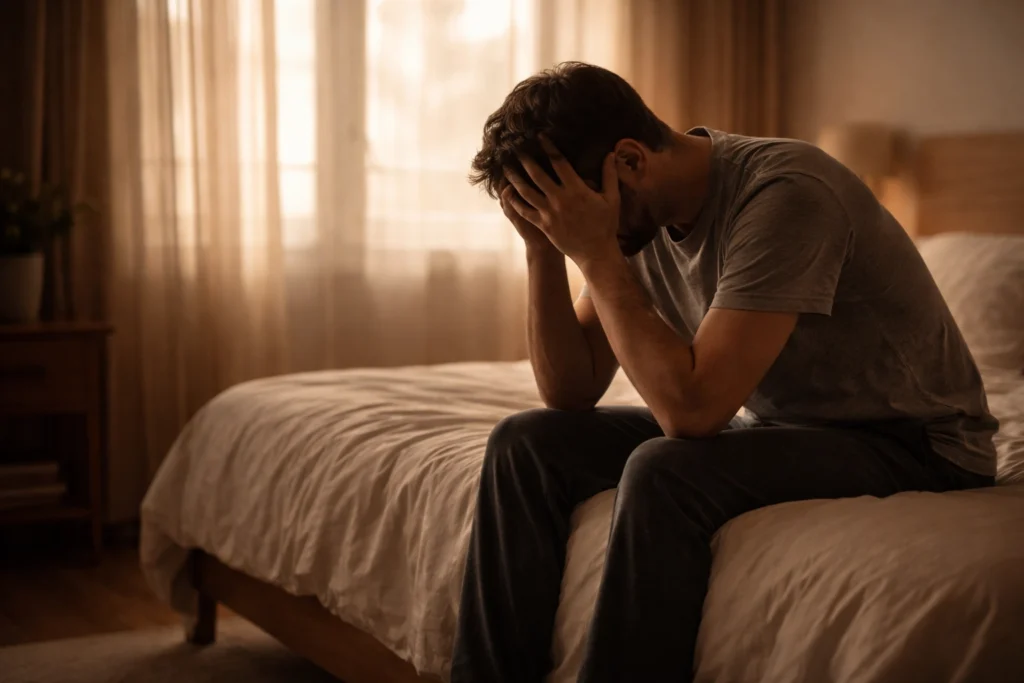
Meta description: Learn five practical steps for PIED recovery, calming performance anxiety, understanding PIED symptoms, and rebuilding natural intimacy confidence without pills. By Martina Somorjai, Award-Winning Potencyologist® Quick answer: How do you break the anxiety trap behind PIED? PIED is commonly used to describe a pattern where screen-based stimulation appears easier than partnered intimacy. Anxiety can then reinforce the pattern: you expect difficulty, monitor your body, become tense, and interpret the result as proof that something is permanently wrong. Breaking the cycle requires more than trying to force a physical response. You need to address the digital conditioning, anxious thoughts, nervous-system tension, and pressure surrounding intimacy. These five steps provide a practical starting point: Map your personal anxiety loop. Reduce high-intensity digital stimulation. Reframe catastrophic thoughts. Rebuild confidence gradually. Create a long-term recovery structure. In my work as an Award-Winning Potencyologist® and leading innovator in natural potency restoration, I focus on root causes rather than temporary symptom control. Why PIED and anxiety can reinforce each other When people search for “performance anxiety erectile dysfunction,” they are often describing a repeating mind-body pattern: You anticipate an intimate situation. You remember a previous difficult experience. You worry that it will happen again. Your nervous system shifts into a stress response. Your attention moves away from connection and toward monitoring. Your physical response becomes less reliable. The experience creates another memory to fear. This does not automatically mean that the problem is purely psychological. Physical health, medication, sleep, stress, relationship tension, and other factors can also contribute. Insufficient data to verify your individual cause from an article alone. The goal is to stop treating every difficult moment as a final verdict about your body or identity. Step 1: Map your PIED symptoms and anxiety loop Before changing your habits, identify the exact pattern. Vague worry creates confusion. Specific observation gives you something practical to work with. Common PIED symptoms to track You may notice patterns such as: A stronger response with digital stimulation than with a partner Difficulty staying present during partnered intimacy Needing fantasy or visual material to become aroused Losing your physical response when pressure increases Repeatedly checking whether your body is responding Avoiding intimacy because you fear disappointment Feeling shame, frustration, or detachment afterward Write down what happens without judging yourself. Use four headings: Area Question Situation What was happening immediately before difficulty began? Thought What did you predict would happen? Body What sensations appeared, such as tension or rapid breathing? Behaviour Did you withdraw, check, rush, or seek reassurance? This simple map can reveal whether anxiety begins before the physical change or follows it. The Potency Questionnaire uses detailed self-analysis to explore these patterns. Awareness is not a diagnosis, but it can help you identify where to begin. Step 2: Reduce high-intensity digital stimulation If your brain has become accustomed to constant novelty, partnered intimacy may feel slower, less predictable, or more demanding. Reducing high-intensity digital material gives your attention an opportunity to reconnect with real-world cues. Choose a clear personal boundary. For example: Remove saved explicit material. Use website or device filters. Keep your phone outside the bedroom. Avoid digital stimulation when you are tired, stressed, or lonely. Replace the habit with walking, exercise, journaling, or direct connection. Record urges without automatically acting on them. A 30-day structure can make the process easier to measure, but there is no universal recovery timeline. Some men notice changes quickly; others need more time and support. PIED recovery should be treated as a process of retraining attention and response, not as a test of willpower. If stopping feels impossible or the habit is connected to trauma, compulsive behaviour, or severe distress, consider professional psychological support. Step 3: Challenge the thought that creates pressure Anxiety often grows from a prediction rather than from the present moment: “It will happen again.” “My partner will lose respect for me.” “I have to be perfect.” “If I lose my response once, I am permanently damaged.” These thoughts feel convincing because your body reacts to them. They still need to be examined. The American Psychological Association’s cognitive restructuring framework recommends separating a situation, feeling, thought, evidence, and decision. You can apply that method to intimacy-related anxiety. A five-question thought reset What happened?Describe the event without exaggeration. What did I feel?Choose the strongest feeling, such as fear, shame, sadness, or anger. What did I predict?Write the exact thought behind the feeling. What evidence supports it and challenges it?Consider facts, not only your emotional reaction. What is a more accurate response?Replace “This proves I am broken” with a balanced statement such as: “My nervous system is under pressure, and I can learn a different response.” The purpose is not forced positivity. It is accuracy. The APA cognitive restructuring handout explains this process in detail. Step 4: Rebuild confidence without forcing performance Trying to prove that your body works can create the exact pressure that blocks natural response. Instead, temporarily remove the pass-or-fail goal from partnered intimacy. Begin with a gradual confidence ladder: Spend time together without an expectation of intercourse. Practise relaxed closeness, conversation, kissing, or non-goal-oriented touch. Focus on breathing and physical sensations rather than monitoring firmness. Communicate openly when anxiety appears. Progress only when the current step feels manageable. Treat pauses as part of intimacy rather than evidence of failure. If your goal is learning how to last longer in bed naturally, rushing and tension usually work against you. Slow breathing, relaxed muscles, communication, and attention to sensation can help you stay present and notice rising tension earlier. The same principle applies to premature ejaculation anxiety. Fear of finishing too quickly can increase urgency and body tension. A calmer pace, planned pauses, and reduced pressure can create more room for control. My approach places confidence before performance. When intimacy becomes a shared experience instead of an examination, the nervous system has a better opportunity to settle. Step 5: Build a recovery structure that includes support Short-term motivation is useful, but consistent structure creates lasting change.
5 Steps to Rewire Your Intimacy Response for Natural Potency
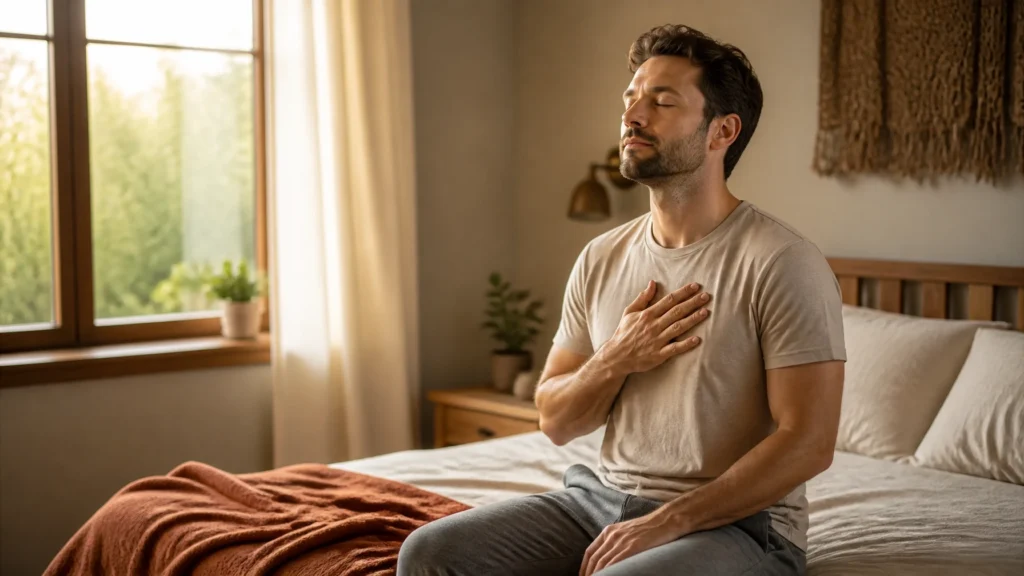
Meta description: Learn five practical steps for PIED recovery, calmer performance, and natural potency by addressing stress, screen habits, and brain-body connection. A natural intimate response is not controlled by one single factor. It is influenced by your nervous system, thoughts, habits, emotional safety, physical condition, and expectations. When several of these areas become unbalanced, your body may begin responding differently than it once did. You may notice reduced firmness, difficulty staying present, faster release than you want, or a strong response alone but not with a partner. These patterns can improve. The goal is not to force your body to perform. The goal is to create the conditions in which a calm, connected response can return naturally. What does it mean to rewire your intimacy response? Rewiring means teaching your brain and body to associate intimacy with safety, connection, sensation, and presence instead of pressure, screens, fear, or self-monitoring. This is especially relevant during PIED recovery. PIED refers to a screen-conditioned response pattern in which digital stimulation becomes easier to respond to than real-life closeness. Common pied symptoms may include: Needing highly specific digital stimulation to become aroused Reduced interest in real-life intimacy Difficulty maintaining firmness with a partner Frequently comparing real experiences with online content Feeling anxious, distracted, or emotionally distant during closeness These symptoms do not automatically prove one cause. Medical, psychological, relationship, and lifestyle factors can overlap. If your changes are sudden, persistent, painful, or accompanied by other health concerns, speak with a qualified healthcare professional. Meet the expert behind this root-cause approach I am Martina Somorjai, an Award-Winning Potencyologist® and a leading innovator in natural potency restoration. I have worked in this field for 10 years, focusing on the psychological, mental, neurological, and emotional factors that can influence male performance. My approach does not begin with pressure or a quick fix. It begins with understanding the pattern behind the symptom. Through the PoP Potency Program, I guide men toward practical brain and body retraining without pills or medication. The 30-day online program is private and includes educational content, exercises, reflection work, and structured guidance for rebuilding confidence. Step 1: Identify what is conditioning your response Before changing your response, identify what may be shaping it. For seven days, write down brief answers to these questions: When does my response feel strongest? When does it become difficult? What was I thinking immediately beforehand? Had I used digital stimulation earlier that day? Was I tired, stressed, rushed, or worried about disappointing someone? Was I focused on connection or monitoring my performance? Do not use this exercise to criticize yourself. Use it to find patterns. A response that changes depending on the situation may point toward psychological or contextual factors. A response that is consistently reduced in every situation may require a broader health evaluation. This self-observation matters because many men treat only the visible problem. A root-cause approach asks what happens before the problem appears. Step 2: Create a screen reset that your brain can follow If your brain has become accustomed to constant novelty, fast changes, or highly intense digital stimulation, real-life intimacy may initially feel slower and less stimulating. A reset gives your attention and reward system space to respond to natural cues again. Start with these actions: Remove explicit digital material from your devices. Unfollow accounts that trigger compulsive browsing. Keep your phone outside the bedroom at night. Replace late-night scrolling with reading, walking, stretching, or conversation. Notice urges without automatically acting on them. The purpose is not punishment. It is to reduce the gap between digital stimulation and real-life connection. During PIED recovery, progress may not be perfectly linear. Some days may feel encouraging, while others may feel flat or uncertain. That does not necessarily mean you are moving backward. Your brain and body may need repeated, lower-pressure experiences before a new pattern becomes familiar. Step 3: Regulate performance anxiety before intimacy Performance anxiety can create a loop: You remember a difficult experience. You predict that it will happen again. Your body enters a stress response. You monitor firmness, timing, or your partner’s reaction. Natural arousal becomes more difficult. The experience reinforces the original fear. This is one reason the psychological causes of performance problems deserve attention. Try this simple breathing practice before closeness: Inhale gently through your nose for four counts. Exhale slowly for six counts. Repeat for two to five minutes. Keep your shoulders relaxed. Focus on the feeling of air leaving your body. The longer exhale can help shift your attention away from threat monitoring and toward calm presence. During intimacy, return to your breathing whenever you notice tension rising. Also replace performance-based thoughts with grounded statements: “I need to prove myself” becomes “I can stay present.” “This must go perfectly” becomes “Connection matters more than control.” “One difficult moment means I have failed” becomes “My body can have different responses on different days.” If you are dealing with premature ejaculation anxiety, the same approach applies. Fear of releasing too quickly can increase tension and speed up the arousal curve. Calm breathing and reduced pressure can help you notice changes earlier. Step 4: Train awareness instead of chasing a result If you want to understand how to last longer in bed naturally, begin by learning your arousal scale. During solo practice or partnered intimacy, rate your arousal from 1 to 10. When you reach approximately 6 or 7, pause or slow down before the urge becomes difficult to manage. Use the pause to: Relax your jaw and shoulders Take two slow breaths Notice sensations without judging them Change rhythm or position Communicate with your partner Resume only when your arousal has lowered This is often called a start-pause method. It is not about suppressing your body. It is about recognizing the early signs of rising intensity. You can also add gentle pelvic floor awareness. Tightening these muscles constantly may create more tension, so balance contraction exercises with relaxation. If you experience pain, persistent tightness, or uncertainty about technique, consult
Straight Answers: 7 Myths About Natural Potency, Busted

Meta description: Explore seven evidence-aware myths about natural potency restoration, PIED recovery, anxiety, and lasting confidence without fixed timelines. Natural potency restoration is often presented as either a miracle solution or an impossible goal. Neither view is helpful. Performance concerns can involve psychological, mental, neurological, vascular, hormonal, relational, and lifestyle factors. The most useful approach is balanced: understand the possible causes, avoid unsupported promises, and choose strategies that address the whole person. Martina Somorjai is an Award-Winning Potencyologist®, a leading innovator in natural potency restoration, and has 10 years of experience helping men understand performance-related challenges. Her work focuses on confidence, self-awareness, nervous-system regulation, and the personal patterns that may influence intimate performance. This article answers seven common questions without promising instant results or fixed recovery timelines. Myth 1: Natural supplements reliably solve every performance problem Fact: Most supplements have limited or inconsistent evidence “Natural” does not automatically mean effective, safe, or suitable for every person. Many products marketed for male performance have not been tested in high-quality human studies. The National Center for Complementary and Integrative Health notes that many natural products are promoted with claims that lack sufficient evidence. Harvard Health has also warned that some enhancement products may contain undisclosed prescription ingredients. This matters because supplements can: Interact with heart, blood-pressure, or psychiatric medication Contain inconsistent doses Produce side effects Delay a proper medical assessment Create false confidence in a product that has not been adequately studied Lifestyle improvements, psychological support, and professional assessment may be useful. However, no herb or supplement should be treated as a guaranteed answer. Myth 2: Natural potency is only about blood flow Fact: Physical response depends on several connected systems Blood flow is important, but it is only one part of the process. A firm response also depends on nerve signalling, attention, emotional safety, hormonal balance, and the body’s ability to shift away from stress. This is why two men with similar physical health can experience very different outcomes. One may respond easily in a relaxed setting but struggle during partnered intimacy. Another may notice changes across several situations and require a broader medical investigation. Possible contributors include: Stress and chronic worry Relationship tension Low mood Medication side effects Sleep disruption Metabolic or cardiovascular concerns Nerve-related conditions Learned arousal patterns Fear of disappointing a partner The phrase erectile dysfunction psychological causes describes only one part of the picture. Psychological factors can be significant, but they should not automatically replace medical evaluation. Myth 3: Performance anxiety means the problem is imaginary Fact: Anxiety can create real changes in the body Anxiety is not “just in your head.” It can activate the body’s threat-response system, making it harder to remain calm, focused, and physically responsive. A common loop looks like this: You remember a previous difficult experience. You predict that it will happen again. Your body becomes tense and alert. You monitor your performance instead of staying present. The physical response becomes less reliable. The experience reinforces the original fear. This pattern is often discussed as performance anxiety erectile dysfunction. The symptoms are real even when anxiety is an important contributor. Useful strategies can include slower breathing, reducing self-monitoring, communicating openly with a partner, and temporarily removing pressure to achieve a specific outcome. If anxiety is persistent or severe, a qualified mental-health professional may offer appropriate support. Myth 4: Morning firmness proves everything is psychological Fact: Situational differences do not provide a complete diagnosis Some men experience spontaneous or morning firmness but struggle during partnered intimacy. Others notice changes in both situations. Neither pattern alone can identify the cause. Sleep, stress, relationship context, medication, physical health, and attention all influence the body differently at different times. A response during sleep does not rule out a meaningful difficulty during intimacy, and its absence does not prove a specific diagnosis. If changes are new, persistent, worsening, or associated with pain or other symptoms, a medical check-up is appropriate. The goal is not to label the problem quickly. The goal is to understand what may be contributing. Myth 5: PIED is a guaranteed diagnosis for anyone who consumes explicit digital content Fact: PIED is an informal term, not a universal diagnosis PIED is commonly used to describe performance difficulties that a person believes are connected to repeated exposure to explicit digital content. It can be a useful term for describing a personal pattern, but it is not a guaranteed diagnosis and should not be assumed without considering other factors. Current evidence does not prove that digital content directly causes performance difficulty in every man. Associations may involve: Frequency and intensity of use Compulsive habits Anxiety and shame Unrealistic expectations Reduced interest in real-life intimacy Relationship dissatisfaction Existing physical or psychological concerns When considering pied symptoms, look at the whole pattern rather than one habit in isolation. A personal review might include when the difficulty began, whether it occurs during solo stimulation or partnered intimacy, changes in desire, stress levels, sleep, medication, and general health. For some men, reducing explicit digital content and addressing compulsive patterns may be helpful. For others, additional medical or psychological factors may remain. PIED recovery therefore has no universal method or fixed timeline. Myth 6: Learning how to last longer in bed naturally requires a single trick Fact: Timing and control usually involve practice, awareness, and reduced pressure Many men search for how to last longer in bed naturally and expect one technique to solve everything. In practice, timing can be influenced by arousal speed, anxiety, pelvic-floor tension, attention, stimulation patterns, communication, and previous experiences. Helpful principles may include: Notice rising arousal before it becomes overwhelming Slow the pace rather than waiting until control is lost Use breathing to reduce unnecessary tension Communicate with a partner about rhythm and pauses Focus on connection rather than a stopwatch Avoid harsh self-judgment after an unsatisfying experience Premature ejaculation anxiety can intensify the very urgency a man is trying to control. A calmer, more observant approach may help, but persistent concerns deserve professional assessment.